Choose bridge tooling (aircraft-grade 7075 aluminum or unhardened P20/S50C soft steel) whenever you need molded parts in under eight weeks or your lifetime volume sits below 100,000 pieces, and reserve hardened production tooling (heat-treated H13 or S136 stainless steel) strictly for frozen designs exceeding 100,000 units. When weighing bridge tooling vs production tooling during a new product launch, the single costliest procurement trap is financing a $30,000 multi-cavity hardened mold before your CAD geometry is locked or your market demand is proven. Pair the tooling thresholds below with our complete buyer’s guide to sourcing precision plastic parts so your mold investment matches your actual production ramp.
Table of Contents
- The Three Tooling Tiers Compared by Cost, Speed, and Life
- Four Launch Scenarios Where Bridge Tooling Wins
- The Cost and Risk Math: Piece-Part Premium vs Engineering Change Tax
- How to Run Bridge Tooling Without Triggering a Re-Qualification Cliff
- Two Launches Where Bridge Tooling Decided the Outcome
- Five Red Flags When Auditing a Bridge Tooling Quote
1. The Three Tooling Tiers Compared by Cost, Speed, and Life
Tooling is not a binary choice between 3D-printed prototypes and a million-shot steel mold. Modern injection molding splits cavity construction into three distinct tiers governed by steel hardness, cavitation, and cooling complexity.
| Tooling Tier | Cavity Material | Typical Tool Cost (USD) | Lead Time to T1 Samples | Guaranteed Cavity Life (Shots) | Realistic Volume Sweet Spot | When It Becomes a False Economy |
|---|---|---|---|---|---|---|
| Prototype Tooling | 3D-printed photopolymer, infiltrated metal, or QC-10 aluminum | $1,500 to $4,000 | 1 to 2 weeks | 50 to 1,500 shots | 50 to 1,000 parts | Running over 1,500 units or shooting glass-filled resins that erode soft cavities in hours |
| Bridge Tooling | 7075-T6 aluminum, S50C, or pre-hardened P20 / 718H (28-32 HRC) | $3,500 to $9,500 | 3 to 5 weeks | 10,000 to 100,000 shots | 1,000 to 80,000 parts | Using it past 100,000 shots per year where single-cavity cycle times inflate unit piece price |
| Production Tooling | Through-hardened H13, S136, or 420SS (48-52 HRC), multi-cavity | $15,000 to $60,000+ | 8 to 14 weeks | 500,000 to 1,000,000+ shots | 100,000+ parts per year | Cutting hard steel at EVT/DVT when a single post-test CAD revision costs $12,000 in EDM rework |
One-line rule: a hardened multi-cavity production mold only beats bridge tooling once your cumulative demand clears roughly 100,000 shots, because below that threshold your piece-price savings never recover the extra $15,000 to $25,000 spent on hardened steel and hot-runner manifolds.
2. Four Launch Scenarios Where Bridge Tooling Wins
When evaluating bridge tooling vs production tooling on a live project schedule, bridge molds solve four recurring supply-chain bottlenecks.
2.1 Commercial Pilot and Market-Validation Launches (2,000 to 10,000 Units)
You have a finished industrial sensor or smart-home controller, and sales needs 5,000 packaged units for a regional distributor rollout to prove sell-through before the board approves a $45,000 four-cavity production tool. CNC-machining or urethane-casting 5,000 enclosures will cost $18 to $35 per unit and fail UL drop tests because cast thermosets do not behave like injection-molded thermoplastics. Cutting a single-cavity P20 bridge mold for $5,500 puts real injection-molded PC/ABS parts in your hands at $2.10 per unit — so use bridge tooling for any pilot between 1,000 and 10,000 units to validate market demand with true production resin at a fraction of CNC cost.
2.2 EVT and DVT Engineering Builds With Moving Geometry
During Engineering Validation Testing (EVT) and Design Validation Testing (DVT), snap-fit beam lengths, PCB boss heights, and elastomeric seal compressions almost always shift after drop, thermal, and ingress testing. If you are also evaluating multi-material assembly methods during DVT, check our insert vs overmolding vs two-shot cost comparison before committing to complex rotary tooling. Because bridge molds use unhardened P20 or 7075 aluminum, a toolmaker can mill a steel-safe boss adjustment or weld and re-cut a rib in 48 hours without annealing and re-hardening the cavity block — so mandate bridge tooling throughout EVT/DVT and refuse to authorize hardened H13 steel until certification testing passes.
2.3 Bridging the 12-Week Gap While a Production Mold Is Being Built
Suppose an EV charging brand lands an urgent purchase order requiring 15,000 connector housings starting in week 5, but their 8-cavity hardened H13 production mold with a valve-gated hot runner requires 12 weeks to manufacture, heat-treat, and polish. Waiting 12 weeks means paying contractual late-delivery penalties; rushing the 8-cavity mold leads to sloppy cooling channels and flash. The smart play is kicking off both molds simultaneously on day one: a simple single-cavity cold-runner bridge tool delivers T1 parts in week 3 and pumps out 3,000 units a week through week 12, seamlessly feeding the assembly line until the 8-cavity tool passes PPAP — so run parallel bridge tooling whenever your customer’s delivery date falls inside your hard tool’s build window.
2.4 Low-Volume Industrial and Medical Niche Products
Not every product sells half a million units a year. Specialized laboratory analyzer bezels, heavy-equipment control handles, and B2B diagnostic enclosures often run 4,000 to 12,000 units annually over a five-year lifecycle (20,000 to 60,000 total shots). Pre-hardened P20 steel easily survives 50,000 to 100,000 shots of unfilled ABS, PC, or POM without losing dimensional tolerance. Buying a 500,000-shot hardened S136 mold for a 30,000-unit lifetime program is pure capital waste — so treat pre-hardened P20 bridge tooling as your permanent lifetime mold whenever total multi-year demand stays under 80,000 pieces.
3. The Cost and Risk Math: Piece-Part Premium vs Engineering Change Tax
Procurement managers sometimes balk at bridge tooling because the unit piece price from a single-cavity soft mold runs 20% to 60% higher than the piece price from a multi-cavity hardened production tool. That premium exists for three physical reasons: a single cavity produces one part per 35-second press cycle instead of four or eight, cold runners generate sprue waste, and softer steel lacks the beryllium-copper inserts or conformal cooling channels that shave seconds off high-volume runs.
Paying an extra $0.45 per part on your first 10,000 units costs you $4,500. Compare that against the cost of modifying a hardened production mold when an unvalidated design changes. We recently onboarded a US medical-device startup that had jumped straight into a $28,000 two-cavity hardened S136 production mold with a previous supplier during their EVT phase. Two months later, human-factors testing for their FDA submission required moving two internal switch bosses by 1.8mm and thickening the perimeter flange. Because the S136 cavities were already heat-treated to 50 HRC and mirror-polished, the modifications required annealing, TIG welding, re-sinking EDM electrodes, and re-polishing — costing the startup $12,000 in rework fees and delaying their clinical trial by six weeks. Had they started with a $5,800 pre-hardened P20 bridge mold and applied the DFM changes that cut injection mold cost upfront, they could have molded their 3,000 validation handles, modified the soft steel for under $600, and cut the hardened tool only after the regulatory design freeze.
Apply this hard financial threshold to every new program: if there is greater than a 25% chance that your part geometry will require a non-steel-safe revision after initial field or lab testing, the expected cost of re-cutting a hardened mold ($8,000 to $15,000 plus 3 to 4 weeks downtime) outweighs the bridge tool’s piece-part premium every time — so bridge first, no debate.
4. How to Run Bridge Tooling Without Triggering a Re-Qualification Cliff
Bridge tooling fails when buyers treat it as a throwaway “prototype shop” exercise disconnected from their mass-production factory. If Vendor A molds your bridge parts in 7075 aluminum using a generic substitute resin on a 50-ton desktop press, and Vendor B builds your hardened production mold six months later on a 200-ton press, none of your shrinkage data, gate-freeze settings, UL flammability records, or dimensional capability studies carry over. You end up paying a massive re-qualification tax in engineering hours and delayed ramp-up.
To bridge without dropping quality or re-qualifying your supply chain, enforce four continuity rules on your molder:
Shoot the exact same commercial resin grade and color masterbatch in the bridge tool that is specified for mass production (including full resin lot traceability and CoA).
Gate the bridge cavity in the exact same location and style (sub-gate, edge gate, or pin gate) planned for the multi-cavity production tool so fiber orientation, weld lines, and shrinkage vectors match.
Run the bridge mold inside the same tonnage press class and under the same scientific molding documentation (FAI, CMM ballooned reports, and outgoing QC sheets) as mass production.
Keep bridge tool making and production tool making under one roof so the tooling engineers who groom your bridge cavity apply those exact shrinkage offsets when scaling the hardened H13/S136 steel.
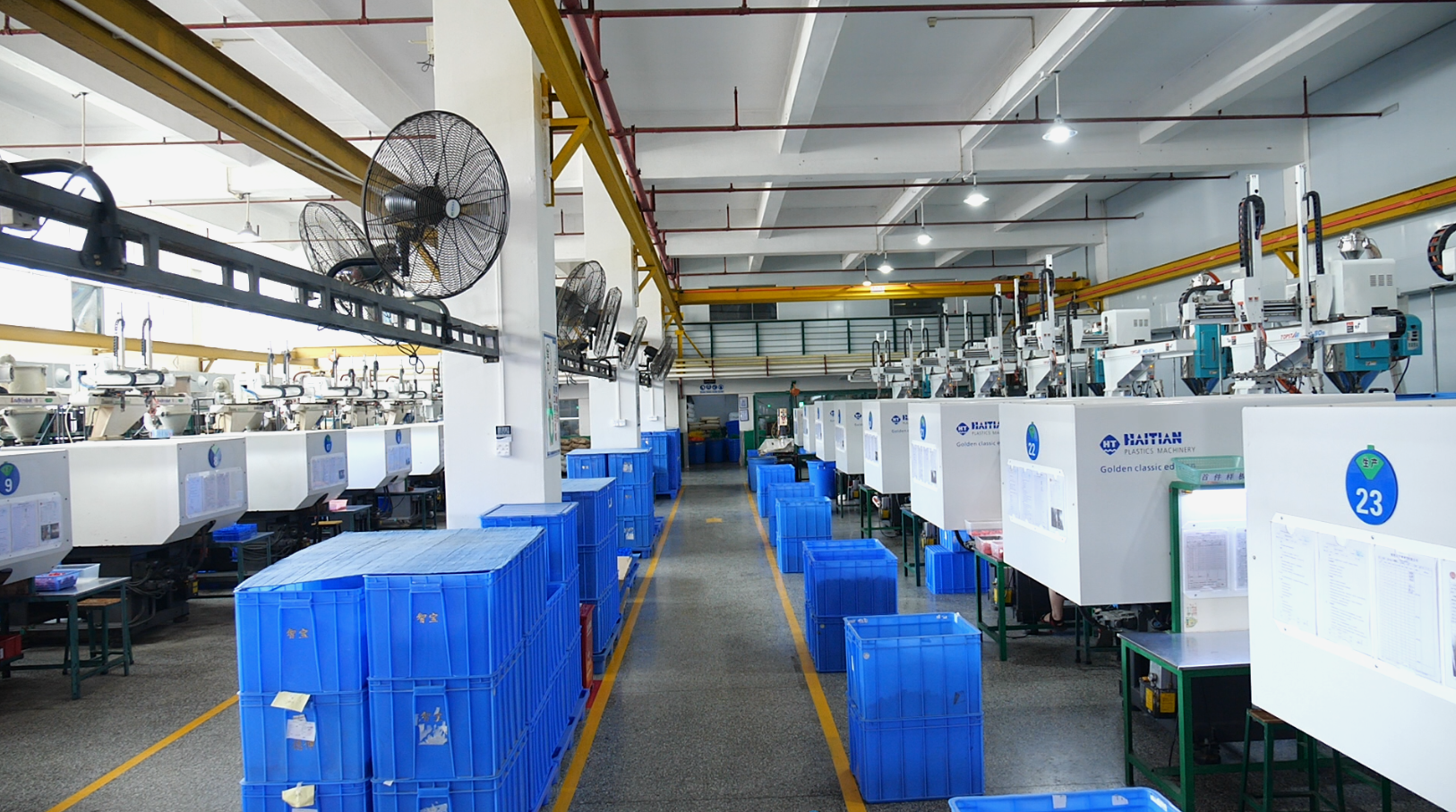
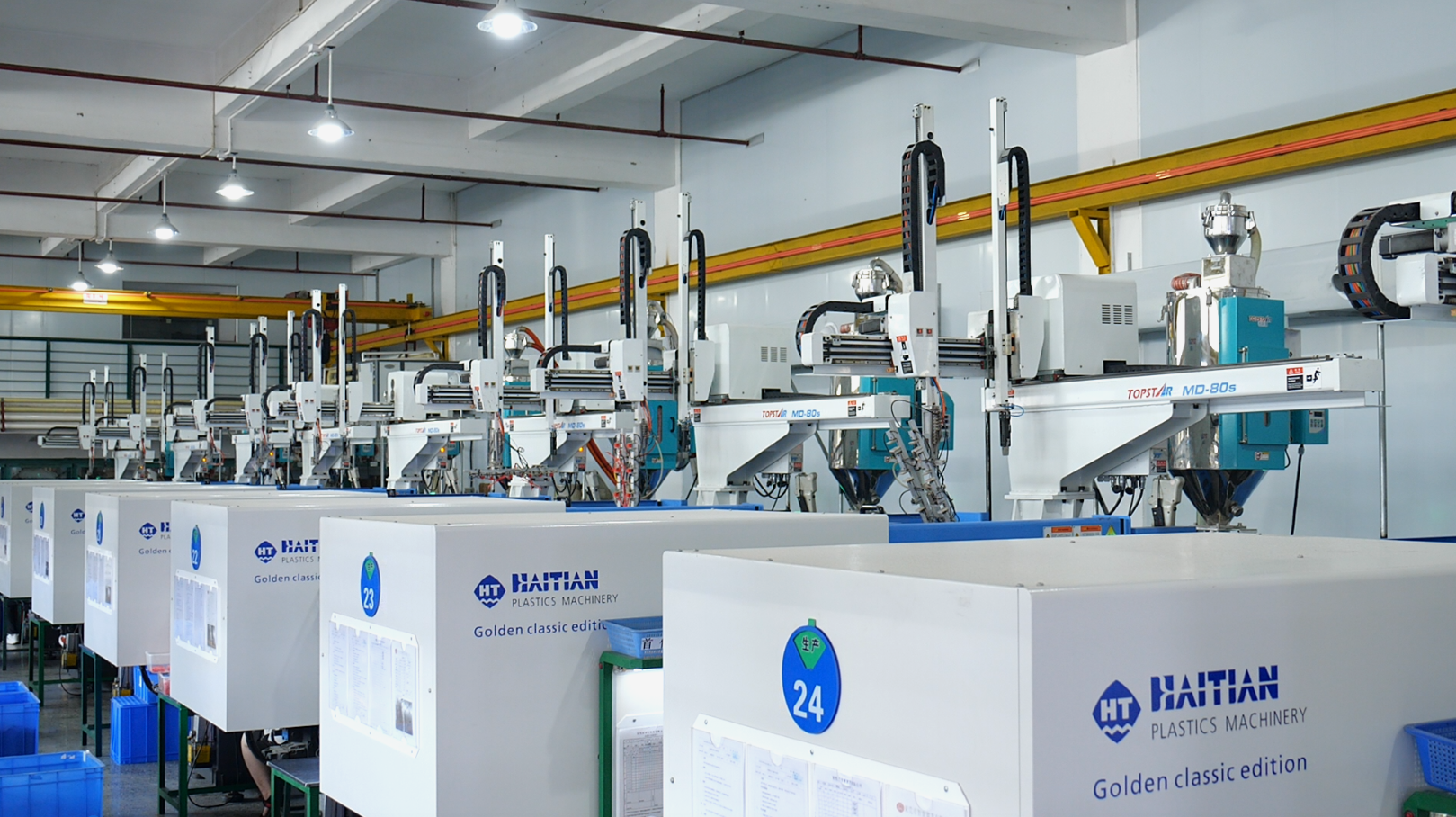
At our ISO 9001:2015 and ICTI-certified facility in Dongguan, our in-house CNC and EDM tool shop builds both fast-turn P20 bridge molds (in 3 to 4 weeks) and hardened multi-cavity production molds on the exact same floor, and we shoot both tools across our 25 injection presses (86T to 360T, including a 250T two-shot machine) using identical virgin resin lots and CMM inspection protocols so you experience zero re-qualification friction when scaling up; review our custom plastic manufacturing capabilities to see our toolroom and metrology equipment.
5. Two Launches Where Bridge Tooling Decided the Outcome
Both came to us at the tooling-decision moment. The tiers in section 1 set the frame; the two programs below show the call under real launch pressure. Before you brief a supplier, work through what to ask a precision plastic parts supplier before ordering so the quote exposes tooling steel and lead time up front.
5.1 A Trade-Show Launch Saved by a Three-Week Bridge Tool
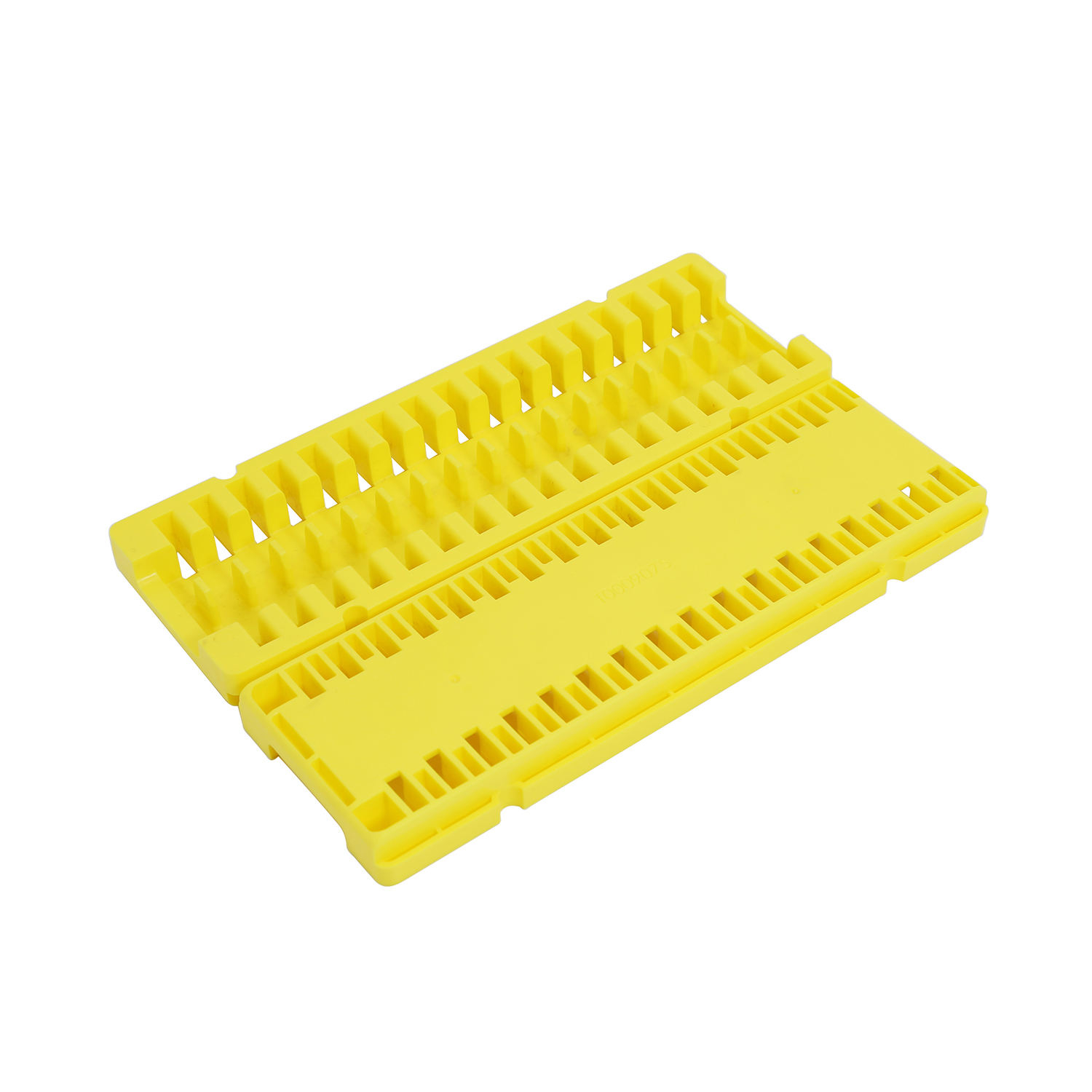
A US startup needed 5,000 units of a connected-home sensor for a trade-show launch six weeks out; a production mold quoted at twelve weeks would have missed the window by a mile. We built a P20 single-cavity bridge tool in our own toolroom in three weeks, ran the launch volume, and because we locked the DFM and steel-safe geometry upfront, the later transition to a multi-cavity production mold needed no re-qualification cliff—same resin, same dimensions, same process window. Bridge tooling bought them the launch and the learning, so use it as a time-and-risk bridge, not a cost shortcut.
5.2 A Bridge Mold That Failed at 80,000 Shots
A power-tools brand ran a bridge mold from a low-cost shop that specified soft P20 steel for a program that scaled past 80,000 shots; the cavity showed witness marks and grew flash at exactly the volume where they could least afford a stop. We re-quoted the production mold with H13 hardened steel matched to the real annual volume and re-validated the process, and the tool has since run past 400,000 shots without a steel-related stop. The mistake was treating bridge and production as the same steel; the grade has to follow the volume, not the price.
6. Five Red Flags When Auditing a Bridge Tooling Quote
Watch for these five warning signs when comparing bridge tooling vs production tooling proposals from overseas suppliers:
The supplier refuses to quote a bridge option for a 5,000-unit launch and pushes a $25,000 hardened multi-cavity tool — they are trying to lock in your capital budget rather than protect your launch schedule.
A “bridge mold” quote comes back at $14,000 with an 8-week lead time — you are paying hardened-production prices and waiting production lead times for unhardened soft steel.
The vendor proposes molding your bridge run in an uncertified “equivalent house resin” instead of the specified UL/OEM grade on your print — invalidating all your DVT mechanical and regulatory testing.
The bridge quotation excludes First Article Inspection (FAI) CMM reports and material Certificates of Analysis, treating bridge shipments as uninspected samples.
The supplier outsources the bridge mold to a rapid-prototyping broker while building the production tool in a separate factory — guaranteeing a dimensional mismatch when you transition.
Audit threshold: if a supplier’s bridge mold quote exceeds 50% of the cost of the full production mold or takes longer than 5 weeks to T1 sample, reject the bid and demand a true MUD (Master Unit Die) insert or standalone pre-hardened P20 cavity block.
Send your 3D STEP model, 2D drawing, target pilot quantity, mass-production forecast, and required launch date to our engineering team today — you will get an honest bridge-vs-production tooling cost breakdown, a complete DFM review, and an itemized quote within 24 hours so we can have bridge parts running on our presses while your hardened production tool is being built.
FAQ
Is bridge tooling durable enough to ship commercial production parts to customers?
Yes, provided your volume fits the tool material’s life rating. A bridge mold cut from pre-hardened P20 or 718H steel easily holds tight ±0.05mm tolerances for 50,000 to 100,000 shots of unfilled engineering thermoplastics, producing parts that are mechanically and cosmetically identical to those from a hardened H13 mold. It only stops making sense above 100,000 parts, where cavity wear on abrasive resins and single-cavity cycle times drive up unit piece costs.
How long does it take to build a bridge mold compared to a production mold?
An aluminum or pre-hardened P20 steel bridge mold typically takes 3 to 5 weeks from CAD freeze to T1 first-article samples, compared to 8 to 14 weeks for a multi-cavity hardened production mold. Bridge tooling cuts build time in half because it uses a single cavity in a standard mold base and skips the multi-week vacuum heat-treatment and post-hardening EDM grinding cycles required for H13 or S136 steel.
Can I transition from a bridge mold to a production mold on the same injection press?
Not only can you, you should insist on it. Running both your single-cavity bridge tool and your multi-cavity production tool on the same press floor with the same resin lot and drying equipment isolates the mold steel as the only variable, allowing your DVT validation data and CMM measurement routines to carry directly into mass production without re-qualifying a new vendor.
What metal is used for bridge tooling in plastic injection molding?
Most industrial bridge molds are machined from pre-hardened P20 or 718H tool steel (supplied at 28 to 32 HRC), S50C medium-carbon steel, or high-strength 7075-T6 aircraft aluminum. Pre-hardened P20 is the workhorse choice for precision plastic parts because it machines fast without needing heat treatment, withstands clamping pressures without coining the parting line, and allows easy welding and re-cutting if your part geometry changes after T1 sampling.