For low and mid-volume programs under 100,000 units a year, insert molding or two-step overmolding on a standard single-shot press is almost always cheaper than two-shot molding; reserve two-shot strictly for runs above 100,000 parts per year where its faster automated cycle and zero secondary handling finally pay back the 1.8x to 2.5x tooling premium. When evaluating insert vs overmolding vs two-shot for a new assembly, most buyers over-specify two-shot on the drawing and end up financing a complex rotary-platen mold they never amortize. Pair the process rules and cost thresholds below with our complete buyer’s guide to sourcing precision plastic parts so you lock the lowest-cost manufacturing route before cutting steel.
Table of Contents
- How the Three Multi-Material Processes Actually Run
- How the Bond Holds: Mechanical Interlock vs Chemical Adhesion
- Tooling and Cycle Cost Comparison
- Volume Thresholds and the Total-Cost Decision Formula
- Two Bonding Problems We Rescued From the Toolroom
- Substrate-to-Elastomer Compatibility Matrix
1. How the Three Multi-Material Processes Actually Run
All three processes combine distinct materials into one finished part number, but they use completely different press setups, mold bases, and labor models on the factory floor.
1.1 Insert Molding: Metal or Pre-Made Hardware in a Single Shot
In insert molding, an operator or a 6-axis robot loads a discrete preformed component — typically a knurled brass threaded bushing, stainless steel dowel pin, electrical contact blade, or sealed ball bearing — onto locating pins inside the open mold cavity. The press closes and shoots a single thermoplastic resin around the hardware, encapsulating its undercuts or knurls as the polymer cools. You pay for one material, one injection cycle, and one straightforward single-barrel mold, so choose insert molding whenever your primary goal is locking metal threads, electrical terminals, or shafts into a structural plastic body without post-mold ultrasonic staking.
1.2 Overmolding (Two-Step Pick-and-Place): Two Molds on Standard Presses
In traditional two-step overmolding, you mold a rigid plastic substrate (such as PC/ABS, PA66, or PP) inside a standard single-shot mold, eject the part, and transfer it into a second separate mold where a soft elastomer (TPE, TPU, or LSR) is injected over specific grip or sealing zones. You can run both molds across two adjacent standard presses or sequentially on the same press in batch campaigns, relying on an operator or fixture to hand-load the cooled substrate into the overmold tool. Because both tools use standard mold bases and run on commodity single-barrel presses, your upfront tooling investment stays low — so default to two-step overmolding whenever your annual volume sits below 100,000 pieces.
1.3 Two-Shot (2K) Molding: One Rotary Mold, Two Barrels, Zero Handling
Two-shot (or 2K) injection molding runs on a specialized press equipped with two independent injection barrels and a 180-degree rotating platen (or core-back shuttle). In the first half of the cycle, Barrel A injects the rigid substrate into Cavity Set 1; while the part is still hot inside the steel, the mold opens, the core side rotates 180 degrees to align with the enlarged second-stage cavity, and Barrel B immediately shoots the TPE or second-color resin over the hot substrate while Barrel A molds the next substrate simultaneously. One mold, one machine, and zero human touch between shots yield the lowest possible piece price at high volume — so specify two-shot only when your demand justifies a dedicated 2K rotary tool.
2. How the Bond Holds: Mechanical Interlock vs Chemical Adhesion
Delamination — where a soft TPE grip or perimeter gasket peels away from the rigid housing like wet tape — is the single biggest field-failure mode in multi-material molding. An elastomer stays attached to a substrate through only two mechanisms: molecular chemical fusion or physical mechanical trapping.
Chemical adhesion works only when the overmolded TPE or TPU grade is specifically formulated to cross-link or co-mingled with the molecular chains of the base polymer at melt temperature. Standard hydrocarbon-based TPE bonds chemically to polypropylene (PP) because their nonpolar polyolefin structures match, and specialty copolyester or polyamide-modified TPE grades bond chemically to nylon (PA6/PA66) or PC/ABS when injected against a clean, hot surface. In two-shot molding, the substrate is still at 60 to 90 deg C and completely free of skin oils or airborne dust when the second barrel fires, giving you peak chemical peel strength. In two-step overmolding, the substrate cools to room temperature in a storage bin and absorbs moisture or shop dust; if an operator touches the bonding face with bare hands or sprays silicone mold release on the first tool, chemical adhesion drops to zero.
When chemical compatibility is weak or non-existent — which is frequently the case when shooting standard commodity TPE over ABS, PC, or metal — you must engineer a physical mechanical interlock directly into the substrate CAD model. That means cutting 2.0mm to 3.0mm pass-through anchor holes so the liquid TPE flows through the substrate wall and forms a rivet-head cap on the backside, machining dovetail undercut grooves along the perimeter edge of the grip zone, and stepping the edge transition down by at least 0.8mm so the user’s fingernail can never catch a feathered 0.1mm rubber lip. Never rely on chemical adhesion alone when pairing TPE with ABS, PC, or metal — design through-hole mechanical locks and shut-off shoulders into the substrate from day one so the grip cannot peel even if chemical bonding fails.
3. Tooling and Cycle Cost Comparison
When weighing insert vs overmolding vs two-shot on a quote sheet, you are trading upfront capital expenditure (mold steel and rotary machinery) against unit operational expenditure (cycle time, operator labor, and scrap).
| Metric / Cost Driver | Insert Molding | Two-Step Overmolding | Two-Shot (2K) Molding |
|---|---|---|---|
| Tooling cost index (single-shot = 1.0x) | 1.1x to 1.3x (adds insert locating pins) | 1.4x to 1.7x (two separate simple molds) | 2.5x to 3.2x (complex rotary/shuttle mold) |
| Press & equipment requirement | Standard single-barrel press + hand/bowl feeder | One or two standard single-barrel presses | Dedicated 2-barrel 2K press with rotary platen |
| Cycle time per finished part | 30 to 45s (includes 5 to 10s manual loading) | 50 to 80s combined across two press setups | 25 to 40s (both shots fire in parallel) |
| Direct labor & handling cost | 1 operator at press loading inserts | 1 to 2 operators transferring & loading parts | Zero manual handling; fully automated ejection |
| Scrap & contamination risk | Low (risk is crushed mold steel from dropped insert) | Moderate (3% to 5% from dust, cooling shrinkage, flash) | Very low (<1%; hot substrate seals shut-offs tightly) |
| Bond & sealing reliability | High mechanical pull-out via knurls/undercuts | Good if interlocked; weaker chemical bond on cold part | Highest chemical + thermal bond on hot virgin surface |
| Economic break-even volume | 1,000 to 500,000+ units (hardware dependent) | 2,000 to 80,000 units per year | 100,000+ units per year |
One-line rule: a rotary two-shot mold costs roughly 1.8x to 2.5x as much as a two-step overmold tool set and runs at a higher hourly machine rate, so its cycle-time and labor savings only break even once annual demand crosses roughly 100,000 parts per year.
4. Volume Thresholds and the Total-Cost Decision Formula
Stop guessing which process fits your program budget. Apply these three hard volume and functional rules before releasing your RFQ:
Annual volume under 30,000 units (or any volume requiring metal threads, pins, or electrical blades): specify insert molding on a standard vertical or horizontal press.
Annual volume between 5,000 and 100,000 units requiring a soft TPE grip, vibration damper, or perimeter gasket: specify two-step overmolding using two separate molds on standard presses; if your initial pilot run is under 5,000 units, review our guide on when to choose bridge tooling over production molds to keep P20 tooling costs minimal.
Annual volume above 100,000 units requiring a soft grip, waterproof two-material seal, or non-wear two-color keypad legends: specify two-shot (2K) molding on a rotary press.
Use this exact total-program math across a 3-year product lifecycle to lock your decision:
Compare [Two-Shot Mold Cost + (Two-Shot Piece Price x 3-Year Volume)] against [Substrate Mold Cost + Overmold Tool Cost + (Combined Two-Step Piece Price x 3-Year Volume)].
Here is how that math plays out on a real shop-floor mistake. A US power-tool brand came to us requesting a quote for a 2K two-shot rotary mold on a handheld diagnostic meter housing with a TPE side grip, forecasting 25,000 units per year. A competing vendor had quoted $34,000 for the two-shot rotary tool and $1.45 per finished part. We ran the numbers for two-step overmolding instead: $9,500 for the PC/ABS substrate mold plus $8,500 for the TPE overmold tool ($18,000 total tooling — saving $16,000 upfront), with a combined piece price of $1.68 including operator transfer labor. At 25,000 units a year, the $0.23 piece-price advantage of two-shot saved only $5,750 per year — meaning the buyer would have waited nearly three full years just to break even on the rotary tool. We built the two-step overmold tools, cut their upfront tooling spend by 47%, and delivered T1 samples two weeks faster — so always run the 3-year amortization math and reject two-shot whenever your volume cannot pay back the mold premium inside 18 months.
5. Two Bonding Problems We Rescued From the Toolroom
Both reached us after a first molder had already shipped scrap. The bond rules in section 2 explain why they failed; the rescues below show the fix on our floor. When you need a fast, lower-risk launch of a multi-material part, review when to choose bridge tooling over production molds so tooling cost does not block your volume.
5.1 A TPE Grip That Peeled Off in Drop Tests
A US consumer-electronics brand asked a contract shop to overmold a TPE grip onto a PP remote-shell by hand pick-and-place. The grip peeled off in 1.5m drop tests because PP is non-polar and forms no chemical bond with TPE—the only hold was a shallow mechanical interlock that fatigue let go. We re-quoted the part as true two-shot on our 250-ton 2K machine using an adhesive-grade TPE tie layer against a pretreated PP substrate, eliminating all manual handling and venting inconsistency. The two-shot grip survived 50 drops from 1.5m and 500 open-close flex cycles with zero delamination, so specify two-shot, not pick-and-place overmolding, whenever the bond is a structural or safety feature.
5.2 An 8,000-Unit Handle That Did Not Need Two-Shot
A garden-tools buyer insisted on two-shot for an 8,000-unit-per-year soft-touch handle, expecting the “best” process. We modeled the total-cost formula from section 4 and showed that at that volume, two-shot’s second barrel and rotary platen added roughly $35,000 of tooling for a bond that insert molding with a pre-placed TPE boot would satisfy. They switched to insert molding, hit the same drop and flex specs, and redeployed the saved tooling budget into a second cavity, so let the volume threshold, not the brochure, pick the process.
6. Substrate-to-Elastomer Compatibility Matrix
Specifying an incompatible substrate-and-rubber pair on your 2D print guarantees field delamination no matter how much you spend on tooling. We recently rescued an automotive interior Tier-2 supplier who had overmolded a standard SEBS-based TPE grip directly onto a smooth ABS trim bezel without through-holes or a tie-layer adhesive; within four months of summer cabin heat, the grips peeled off in sheets. Match your materials using this compatibility table before finalizing your BOM:
| Rigid Substrate Material | Standard SEBS TPE (Polyolefin Base) | Specialty Modified TPE (Polar / Copolyester) | Thermoplastic Polyurethane (TPU) | Mandatory Tooling & Process Rule |
|---|---|---|---|---|
| Polypropylene (PP) | Strong chemical bond (best natural match) | Poor (unnecessary expense) | No chemical bond | No interlock needed; keep melt temp above 190 deg C |
| Nylon (PA6 / PA66) | No chemical bond (delaminates) | Moderate chemical bond (PA-bonding grade) | Weak unless specialty grade | Pre-dry PA; use mechanical through-holes + hot mold |
| ABS and PC/ABS | No chemical bond (delaminates) | Good chemical bond (urethane/ester-modified TPE) | Strong chemical bond | Specify polar-bonding TPE or TPU, plus edge undercuts |
| Polycarbonate (PC) | No chemical bond (delaminates) | Moderate to good chemical bond | Strong chemical bond | Avoid solvent primers on PC (causes stress cracking) |
| Brass / Steel Insert | No chemical bond | No chemical bond | No chemical bond (without liquid primer) | Rely 100% on diamond knurls, hex flats, and annular grooves |
One-line rule: standard commodity TPE only bonds chemically to PP — if your rigid enclosure is ABS, PC, or PA, you must explicitly specify a polar-modified bonding TPE grade (from suppliers like Kraiburg, GLS/PolyOne, or Santoprene) AND cut mechanical through-hole interlocks into the substrate. If you are designing a sealed electronics box, pair these bonding rules with our custom plastic enclosure specs checklist so your overmolded gasket never separates under compression.
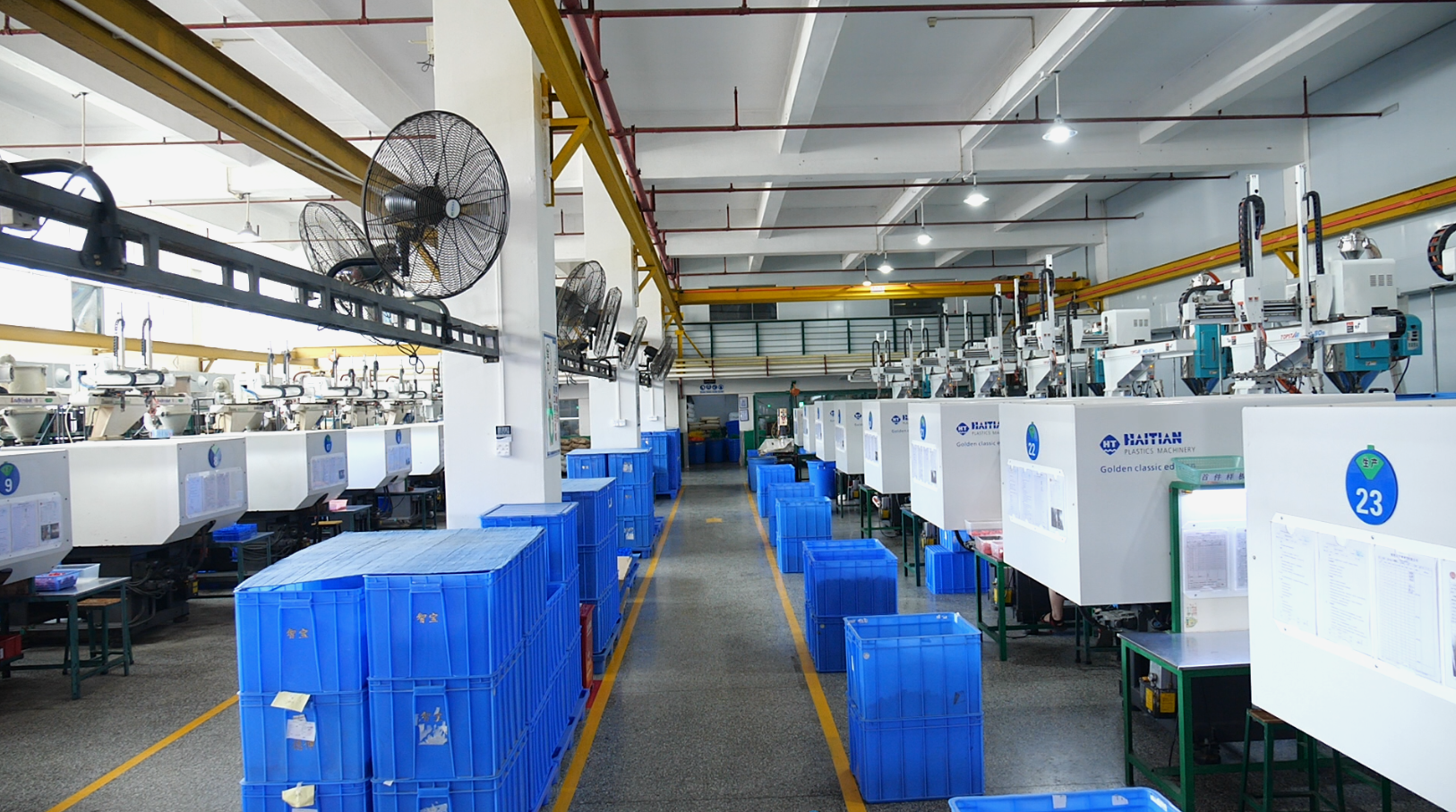
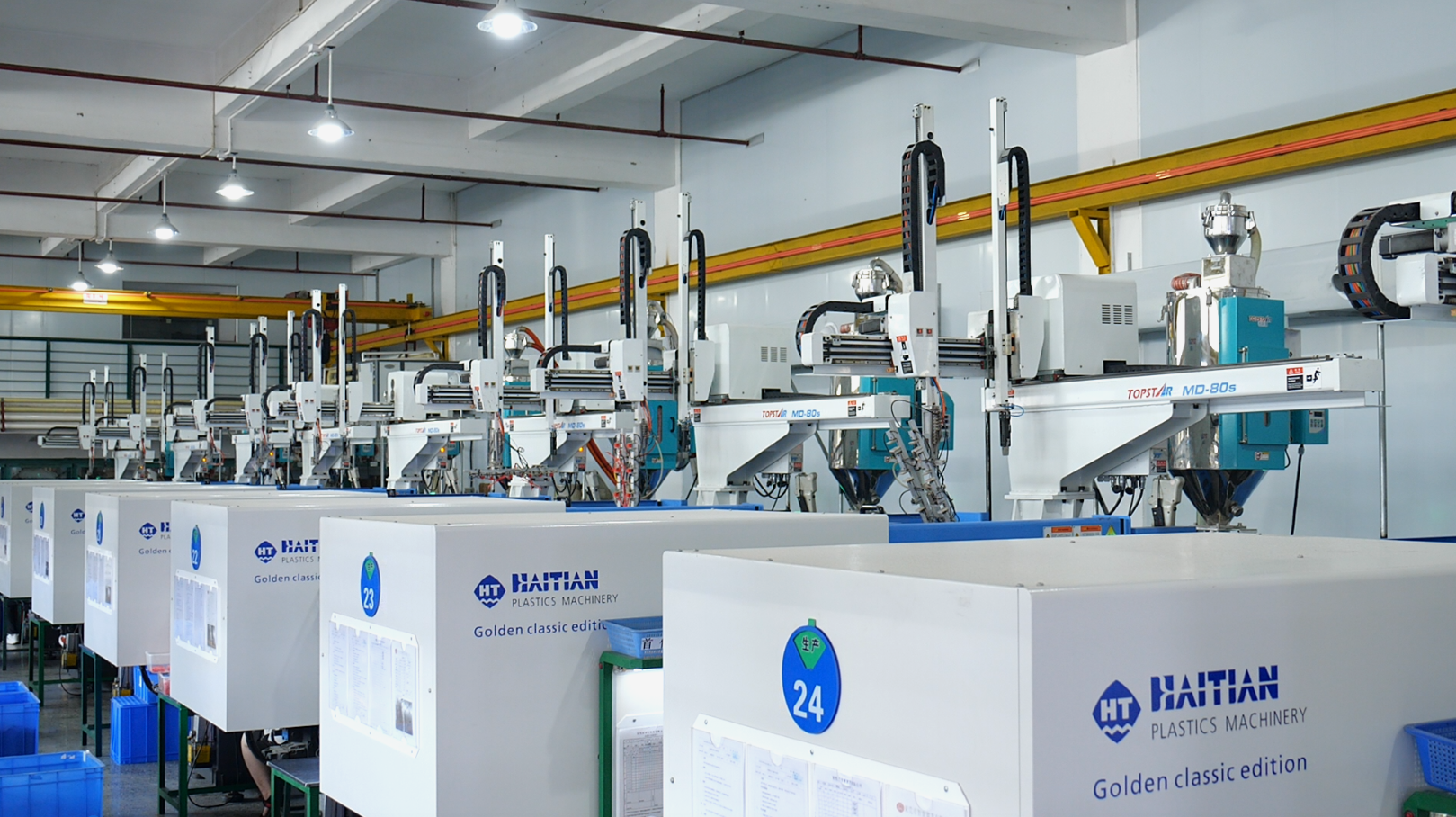
At our ISO 9001:2015 and ICTI-certified facility in Dongguan, we run a dedicated 250T two-shot (2K) injection press for high-volume integrated TPE grips, waterproof seals, and two-color parts right alongside 24 single-shot presses (86T to 360T) configured for precision metal insert molding and two-step overmolding, while our in-house CNC and EDM tool shop machines the exact shut-off land areas and mechanical interlocks required to prevent TPE flash and delamination; inspect our custom plastic manufacturing capabilities for our full press roster and CMM metrology lab details.
Send your 3D STEP model, 2D drawing, target annual volume, and the exact function of your second material (soft grip, IP67 seal, two-color legend, or torque-bearing metal insert) to our engineering team today — you will get an unbiased process recommendation (insert, two-step overmold, or 250T two-shot), a chemical and mechanical bond check, and an itemized quote within 24 hours.
FAQ
Is two-shot molding always better than two-step overmolding?
No — two-shot is only economically better once your annual volume exceeds roughly 80,000 to 100,000 parts per year. Below that threshold, two-step overmolding on standard single-barrel presses wins on total landed cost because the tooling costs 40% to 50% less and avoids high two-shot press hourly rates.
Can TPE bond directly to ABS or polycarbonate without glue?
Standard polyolefin-based TPE will not bond chemically to ABS or PC and will peel off right out of the mold. To bond without liquid primers or adhesives, you must specify a specialty polar-modified TPE grade (or TPU) engineered for styrenic and polycarbonate adhesion, and back it up with mechanical through-holes or undercut grooves in the rigid substrate.
When should I use insert molding instead of pressing brass inserts in after molding?
Use insert molding when you need maximum axial pull-out and torque-out strength on structural fasteners, when the metal component is an internal electrical busbar or sealed bearing that cannot be installed post-mold, or when encapsulating the metal creates a hermetic seal. For standard PCB standoffs in low-stress indoor enclosures, heat-staking or ultrasonically pressing brass inserts after molding is often faster and keeps mold cycle times shorter.
Which multi-material process is fastest and cheapest to prototype?
Insert molding and two-step overmolding are significantly faster and cheaper for prototyping and bridge production. Because they use standard single-cavity mold bases without rotary platens or dual-barrel manifold synchronization, an in-house tool shop can cut and sample a two-step overmold set in 3 to 4 weeks, whereas a production two-shot rotary mold typically requires 6 to 8 weeks of build time.