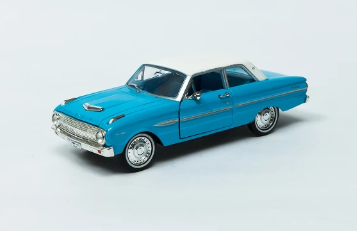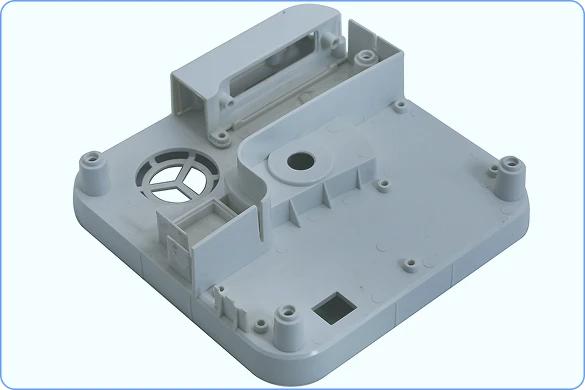
A custom model kits manufacturer turns a brand’s concept—vehicles, aircraft, figures, dioramas, and collectibles—into precise, repeatable, retail-ready plastic products. From 1:24 scale automotive kits to high-fidelity designer figurines, the right factory controls tooling accuracy, material selection, decoration, and export compliance under one roof. This guide explains how to evaluate a custom model kits manufacturer for your brand, the production process behind precision scale kits, and the commercial decisions that drive a successful launch. If your business serves model and collectible brands, this is the technical hub for your sourcing decisions.
Table of Contents
- What Is a Custom Model Kits Manufacturer?
- Why Brands Outsource Model Kit Production to a Factory
- The End-to-End Model Kit Production Process (6 Steps)
- Materials for Model Kits: Plastic, Resin & Engineering Polymers
- Precision, Tolerances & Snap-Fit Engineering
- Surface Finishing & Decoration for Collectibles
- Quality Control & Compliance for Global Export
- How to Choose the Right Model Kits Manufacturer
- OEM Manufacturer vs Trading Company: Which Is Better?
- Plastic vs Resin Model Kits: A Commercial Comparison
- Scale Models vs Miniature Figurines: Which Fits Your Brand?
- Top Custom Model Kit Manufacturers & Factories to Evaluate
- What Makes a Scale Model “High-Quality” or “Premium”?
- Frequently Asked Questions
- Conclusion & Next Steps
1. What Is a Custom Model Kits Manufacturer?
A custom model kits manufacturer is a factory that designs, engineers, and produces scale models, hobby kits, and collectible figures to a brand’s exact specifications—handling tooling, molding, decoration, and assembly under one supply chain.
Unlike a generic injection molder, a custom model kits manufacturer treats every project as a non-catalog engineering build. The factory collaborates on 3D CAD (often STEP/IGS files), runs Design for Manufacturing (DFM) reviews to optimize wall thickness, draft angles, and gate locations, then builds hardened multi-cavity, hot-runner, or side-action molds in-house. Final output ranges from snap-fit 1:24 scale automotive kits and aircraft replicas to high-fidelity designer figurines and limited-edition collectibles. For a deeper decision framework on selecting the right partner, see our guide on how to choose the right model kits manufacturer for your brand.
Common capabilities buyers expect from a serious custom model kits manufacturer:
- DFM-driven engineering and rapid prototyping (prototypes typically in 5–10 days)
- In-house mold making with T1/T2 trial runs and golden-sample locking
- Parameterized injection molding for tight tolerances and zero warpage
- Multi-color pad printing, silk screening, ultrasonic welding, custom painting
- IQC / IPQC / OQC quality gates with CMM measurement and color spectrophotometers
- ISO 9001-aligned QMS plus toy-safety compliance (ASTM F963, CPSIA, EN71) and chemical testing (RoHS, REACH)
- Turnkey assembly, retail-ready packaging, and global freight forwarding
2. Why Brands Outsource Model Kit Production to a Factory
Most brands outsource model kit production to a specialized factory because precision tooling, certified materials, and skilled decoration labor require capital equipment and engineering depth that brand in-house teams rarely maintain.
Building a model kit in-house demands CNC machining for steel molds, parameterized injection presses, pad-printing and silk-screening lines, cleanroom painting cells, and AQL-grade inspection labs. For a brand focused on IP, marketing, and distribution, these fixed assets tie up capital better spent on design and channels. A full-service OEM consolidates tooling, molding, finishing, and packaging under one accountable supply chain, removing multi-vendor markups and finger-pointing when parts do not assemble. The commercial question then becomes whether to engage a true OEM factory or a trading company—explored in our OEM model kits manufacturer vs trading company comparison.
Outsourcing also unlocks scale: a factory running lean 24/7 mass scheduling can absorb sudden demand spikes, while bridge tooling supports low-volume market trials before committing to full mass production. For collectible brands, this means validating a limited run before scaling to thousands of units—protecting both margin and brand reputation.
3. The End-to-End Model Kit Production Process (6 Steps)
A custom model kits manufacturer executes production as a synchronized, six-step workflow—from concept CAD to retail-ready shipment. Each step carries mandatory engineering checkpoints to eliminate defects before they reach the line. For a deeper walkthrough of our workflow, see our custom manufacturing process page.
3.1 Step 1 — Product Idea & 3D Engineering
Brands submit 2D/3D CAD drawings (STEP / IGS), physical samples, or reference renders. The engineering team locks down requirements: target retail price, expected annual volume, material preference, and compliance pathway for the target market (US ASTM F963 / CPSIA, EU EN71, RoHS / REACH, and so on).
3.2 Step 2 — DFM Review & Rapid Prototyping
Before any steel is cut, the factory runs a Design for Manufacturing review to optimize wall thickness, draft angles, resin flow, and gate locations. High-fidelity rapid prototypes and physical sample validation confirm assembly fit, color (Pantone references), and visual aesthetics. Typical prototyping turnaround is 5–10 days.
3.3 Step 3 — Custom Mold Design & Mold Making
Tooling is fabricated in-house on precision CNC, EDM, and wire-cutting machinery. Hardened steel cavities are engineered for multi-cavity, hot-runner, or complex side-action requirements. Mold accuracy is controlled down to ±0.01 mm, with rigorous T1 and T2 trial runs to verify dimensional accuracy and flawless parting lines before the golden sample is locked.
3.4 Step 4 — Advanced Injection Molding
Parameterized injection molding machinery micro-controls pressure, temperature, and clamping force to deliver zero warpage and uniform density across the entire production run. For precision model kits, finished-part tolerances are commonly held around ±0.02 mm—tight enough for snap-fit assembly without glue.
3.5 Step 5 — Surface Treatment, Painting & Printing
Post-molding decoration includes high-fidelity pad printing, multi-color silk screening, ultrasonic welding, and custom texture painting. Operations run under cleanroom conditions with cross-hatch adhesion testing to ensure paint durability under handling and shipping stress.
3.6 Step 6 — Turnkey Assembly, Packaging & Global Delivery
Retail-ready packaging is assembled alongside the product—blister packs, window boxes, multi-layer cartons. Global freight forwarding and protective packing are coordinated to deliver market-ready goods, with fully archived production records and mold parameter logs retained for re-order traceability.
4. Materials for Model Kits: Plastic, Resin & Engineering Polymers
Material choice defines unit cost, detail fidelity, durability, and the compliance pathway for your target market. For a side-by-side production comparison of the two dominant choices, see plastic vs resin model kits.
4.1 Material Comparison for Model Kits
| Material | Cost Profile | Detail & Tolerance | Best Fit |
| ABS | Low raw cost; high rigidity; needs advanced tooling for undercuts. | Holds ±0.02 mm; rigid snap-fit. | Structural bodies, chassis, bases, rigid accessories. |
| PVC | Highly efficient at mass volume; flexible, break-resistant. | Excellent detail retention; flexible parts. | Character figures, clothing folds, soft goods. |
| PC (Polycarbonate) | Higher cost; high impact and heat resistance. | Tight tolerances; transparent grades available. | Canopies, clear parts, high-stress components. |
| PP (Polypropylene) | Low cost; chemical resistant; flexible. | Moderate detail; living hinges. | Functional clips, internal mechanisms, hinges. |
| Resin (Polystone / PU) | No steel tooling (silicone molds); high manual labor. | Highest detail; brittle; limited volume. | Limited-edition display statues, prototypes. |
For most mass-market model kits, a hybrid ABS + PVC split optimizes cost and detail: ABS for rigid structural components (chassis, weapons, bases) and PVC for soft, detailed parts (figures, clothing, flexible joints). Engineering resins such as PC and PP are reserved for parts with specific mechanical or thermal demands.
5. Precision, Tolerances & Snap-Fit Engineering
Precision model kits live or die on tolerance control. A 1:24 scale automotive kit with 200+ snap-fit parts demands that every peg, hole, and clip mate within microns—otherwise the build wobbles or fails to close. For the buyer-facing definition of what separates a premium scale model from a commodity toy, see what makes a high-quality scale model.
A custom model kits manufacturer achieves this through hardened steel molds (±0.01 mm cavity accuracy), parameterized injection presses, and in-process CMM verification. Finished-part tolerances are commonly held around ±0.02 mm for precision kits, enabling glue-free snap-fit assembly and repeatable mating across thousands of units. Draft angles, ejector pin placement, and gate locations are engineered to avoid sink marks, warpage, and flash on visible surfaces.
Real example: ChilBo’s High-Detail 1:24 Scale Model Automotive Kit demonstrates this in practice—multi-part snap-fit body, detailed interior, pad-printed dashboards and chrome trim, all produced under the tolerances above and assembled into a retail-ready box.
6. Surface Finishing & Decoration for Collectibles
Surface decoration is where a model kit becomes a premium collectible. Beyond molding accuracy, buyers judge pad-printed logos, silk-screened gradients, hand-painted faces, and weathered effects. Our full surface-treatment capability—pad printing, silk screening, ultrasonic welding, custom texture painting, and cleanroom assembly—is detailed on our capabilities page.
For collectible figures and designer toys, paint adhesion is verified through cross-hatch adhesion testing, with Pantone-matched colors locked at the golden-sample stage. Cleanroom painting cells reduce dust contamination, while automated multi-axis sprayers ensure consistent coverage on complex geometries. Decorative effects—metallic flake, matte / satin / gloss clears, simulated weathering—are layered in controlled coats to balance aesthetic depth with production repeatability.
7. Quality Control & Compliance for Global Export
Exporting model kits to the US, EU, and other regulated markets requires a documented quality system plus region-specific toy and chemical compliance. Our OEM workflow is built on three rigid gates—IQC (incoming material), IPQC (in-process), and OQC (final outgoing)—aligned to ISO 9001. The full milestone structure is documented on our OEM quality process page.
7.1 Certifications & Compliance Snapshot
| Standard | Scope | Required For |
| ISO 9001 | Quality management system baseline. | Global B2B baseline. |
| ASTM F963 | US toy safety. | United States market. |
| CPSIA | US consumer product safety. | United States market (children). |
| EN71 | EU toy safety. | European Union, United Kingdom. |
| RoHS | Restriction of hazardous substances. | EU electronics-adjacent components. |
| REACH | Chemical substances regulation. | EU export of finished goods. |
For a complete walk-through of which certifications a plastic model kits manufacturer should hold for export—and how to verify them—see our guide on certifications for plastic model kits manufacturers.
Beyond paperwork, compliance is enforced on the line: CMM dimensional checks, color spectrophotometer readings, cross-hatch adhesion tests, and salt-spray chambers for metal components. Final inspection uses AQL random batch audits against the locked golden sample, with full batch traceability retained for re-orders and warranty service.
8. How to Choose the Right Model Kits Manufacturer
Choosing the right model kits manufacturer comes down to five verifiable signals: in-house mold tooling, documented compliance, engineering-led DFM, transparent quality gates, and proven export experience. For a detailed buyer-side walkthrough, see our guide on how to choose the right model kits manufacturer for your brand.
Validate each candidate by requesting: (1) sample parts from past projects at your target tolerance, (2) mold trial reports (T1 / T2) with dimensional data, (3) compliance certificates relevant to your target market, (4) a clear golden-sample lock process, and (5) references from brands actively shipping to your destination region. Manufacturers who resist sharing these signals are a red flag—transparency is the cheapest insurance you can buy.
9. OEM Manufacturer vs Trading Company: Which Is Better?
An OEM model kits manufacturer owns its molds, injection lines, and finishing equipment; a trading company brokers production to subcontracted factories without owning tools. The choice directly affects unit cost, IP protection, lead time, and accountability. Our side-by-side OEM model kits manufacturer vs trading company comparison breaks down the differences in depth.
OEM advantages include direct factory pricing, faster engineering iteration (DFM changes implemented in-house), stronger IP and NDA protection, and single-point accountability for defects. Trading-company advantages are lower entry cost for very small pilots and access to multiple factories from a single broker. For sustained model-kit programs at commercial volumes, an OEM is almost always the lower-risk and lower-total-cost choice.
10. Plastic vs Resin Model Kits: A Commercial Comparison
Plastic (ABS / PVC) and resin (Polystone / PU) model kits serve very different commercial models. Plastic favors mass-market scale, snap-fit engineering, and durable retail handling. Resin favors ultra-high-detail limited editions at significantly higher unit cost and lower volume. For a full production comparison, see plastic vs resin model kits.
Choose plastic when your retail price is under roughly USD 80, annual volume exceeds around 1,000 units, and the kit must survive shipping and handling without damage. Choose resin when you are launching a limited run (often 100–500 units) of a high-detail display piece where buyers accept a premium price and careful handling.
11. Scale Models vs Miniature Figurines: Which Fits Your Brand?
Scale models (vehicles, aircraft, ships, mecha at defined ratios such as 1:24, 1:35, 1:72) emphasize engineering realism, snap-fit assembly, and mechanical detail. Miniature figurines (characters, creatures, designer toys) emphasize sculptural fidelity, surface decoration, and collectibility. Our guide on miniature figurines vs scale models clarifies the commercial and engineering fit.
If your brand serves hobbyists who build, paint, and display, scale models are the natural fit. If your brand serves collectors who display sculpted characters, miniature figurines are the natural fit. Some brands successfully span both categories, but they require distinct tooling, decoration, and packaging strategies—and often a manufacturer experienced in both.
12. Top Custom Model Kit Manufacturers & Factories to Evaluate
A vetted shortlist of credible custom scale model manufacturers and automotive model kit factories saves procurement teams weeks of outreach. Our ranked Top 10 list of custom scale model manufacturers for collectible brands ranks suppliers by capability, compliance, and export track record.
For vehicle and automotive-focused programs, our list of top model kit factories for automotive and vehicle brands narrows the field further by automotive specialization.
Use these lists as a starting point, then validate each candidate against the five signals in section 8. Issuing the same RFQ to a shortlist of three to five qualified factories produces the cleanest commercial comparison and the strongest negotiating position.
13. What Makes a Scale Model “High-Quality” or “Premium”?
In the collectibles market, “high-quality” and “premium” are defined by what they cost to engineer, not what they cost to buy. Tight tolerances, multi-color decoration, durable finishes, and accurate IP representation drive collector perception. For a full technical breakdown, see what makes a high-quality scale model.
For the buyer-facing definition of what elevates a collectible from commodity to premium—including IP accuracy, weight, finish, and unboxing experience—see what makes a collectible model “premium” in the eyes of buyers.
Signals buyers use to judge a premium model kit:
- Crisp parting lines with no flash on visible surfaces.
- Pad-printed logos and instrument panels with sharp registration.
- Snap-fit assembly that closes flush without glue.
- Moveable parts (steering, suspension, doors) that hold position.
- Consistent color match to the golden sample across the production run.
- Retail box that survives international transit without crushing.
14. Frequently Asked Questions
Q1. What is a custom model kits manufacturer?
A custom model kits manufacturer is a factory that produces scale models, hobby kits, and collectible figures to a brand’s specification, owning the mold-making, injection molding, decoration, and assembly processes under one supply chain.
Q2. What tolerances can a precision model kit factory hold?
Hardened steel molds are typically machined to ±0.01 mm cavity accuracy, with finished part tolerances commonly held around ±0.02 mm for precision snap-fit kits—verified by in-process CMM measurement.
Q3. What is the typical lead time for a custom model kit project?
Prototyping usually takes 5–10 days, mold making 2–4 weeks, and mass production depends on volume. A DFM review finalizes the exact schedule before any steel is cut.
Q4. What materials work best for scale model kits?
ABS and PVC are the workhorses for mass-market kits; PC for high-stress or transparent parts; PP for living hinges and functional clips; resin (Polystone / PU) for limited-edition display pieces.
Q5. Which certifications should I require for export to the US and EU?
At minimum: ISO 9001 (QMS baseline), ASTM F963 and CPSIA for the United States, EN71 for the European Union and United Kingdom, plus RoHS and REACH for chemical compliance. Always request current certificate copies before tooling.
Q6. What is the difference between an OEM factory and a trading company?
An OEM owns its molds, injection lines, and finishing equipment and is directly accountable for output. A trading company brokers production to subcontracted factories without owning tools. For sustained programs, an OEM offers stronger IP protection, faster iteration, and lower total cost.
Q7. Can I start with a low-volume pilot before mass production?
Yes. Most custom model kits manufacturers support bridge tooling and low-volume runs (a few hundred units) so brands can validate the market before committing to full mass production.
15. Conclusion & Next Steps
A custom model kits manufacturer is more than a molder—it is an engineering partner that turns IP and product concepts into precision, retail-ready scale kits and collectibles. The right factory brings in-house mold making, DFM-led engineering, parameterized injection molding, multi-color decoration, and documented compliance under one supply chain.
Use this guide as a sourcing framework: define your material split, lock your tolerance and decoration requirements, validate certifications for your target market, and shortlist OEM factories with verifiable track records. The related guides linked throughout this article provide the specifics for each step.
Ready to scope your custom model kit program? Submit your 2D / 3D CAD files, reference samples, or concept sketches and our engineering team will return a feasibility review, indicative timeline, and commercial proposal. Contact us to start the conversation.