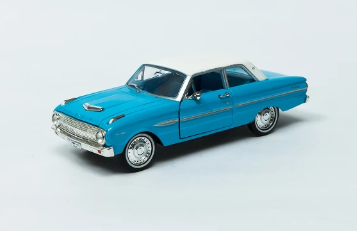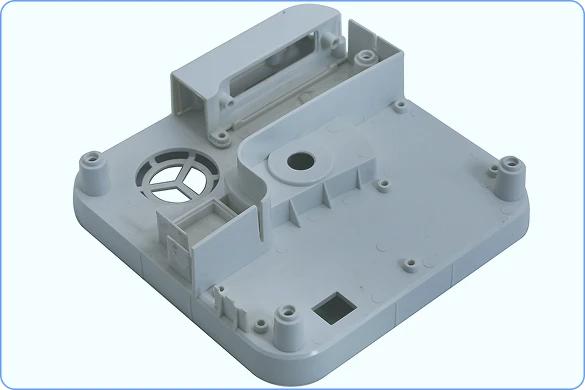
For production runs, plastic injection molding is usually the better choice for scale and consistency, while resin casting suits low-volume, high-detail, or prototype pieces. The right pick depends on how many units you need, the detail level, your budget, and how soon you need the first sample. This guide compares plastic and resin model kits across cost, scale, detail, and lead time so you can choose the right process for your production run.
Table of Contents
- Quick Answer: Which Is Better?
- What Is Plastic Injection Molding for Model Kits?
- What Is Resin Casting for Model Kits?
- Side-by-Side Comparison
- Cost Breakdown: Where the Money Goes
- Detail, Finish, and Consistency
- Lead Time and Tooling Strategy
- When to Use Which: A Decision Tree
- How ChilBo Supports Both Processes
1. Quick Answer: Which Is Better?
Choose plastic injection molding when you need hundreds or thousands of identical, durable model parts at a stable unit cost. Choose resin casting when you need short runs, one-offs, or pieces where ultra-fine surface detail matters more than volume.
The two processes are not enemies. Most experienced model kit brands use resin for prototypes and small-batch test runs, then move to plastic injection for full production once the design is locked. This is the standard path because it balances detail, cost, and timing across a project.
For context, our custom model kits manufacturer guide covers how the full path fits together, from sculpt to shipment.
2. What Is Plastic Injection Molding for Model Kits?
Injection molding pushes melted plastic (commonly ABS, PP, PC, or PVC) into a precision-cut steel mold under high pressure. Once the mold is finished, every shot produces a part that matches the design within tight tolerances, often around plus or minus 0.02 mm on a well-maintained tool.
This repeatability is what makes plastic injection the standard for consistent, scalable quality. Every unit you receive from the same tool will look and fit the same, which matters for a sold product line where buyers expect identical pieces across an entire shipment.
The trade-off is upfront tooling. The steel mold costs time and money to cut, but that cost spreads across the production run and drops the per-unit price as volume rises. For high-volume programs, this is what makes plastic the most cost-effective choice in total cost of ownership.
Plastic also accepts a wide range of finishing. Paint, pad printing, tampo printing, vacuum metallization, and clear coats all hold up well on ABS or PC surfaces. The material keeps its shape and surface texture under these processes, which matters for parts that need brand-accurate logos, color codes, or specialty effects on every unit.
3. What Is Resin Casting for Model Kits?
Resin casting pours liquid resin (typically polyurethane or epoxy) into a silicone or soft mold, then lets it cure at room temperature or under gentle heat. The molds are cheap and fast to make, so small batches are economical and design changes are easy to absorb.
Resin’s strength is surface detail. Soft silicone molds pick up very subtle textures from a master sculpt, which is why resin is the standard for high-end collectible figurines, garage kits, and limited-edition designer toys where surface fidelity matters more than unit count.
The limits are scale and consistency. Each cast can vary slightly from the previous one, cycle times are slower than injection (often tens of minutes per piece), and large production runs become expensive and harder to keep uniform. Resin parts also tend to be more brittle than ABS or PC, which limits their use in parts that will see mechanical stress or active handling.
4. Side-by-Side Comparison
The table below compares the two processes across the dimensions that matter most when you choose a production method. Each row reflects how the process typically behaves on a real production program, not a theoretical best case.
| Factor | Plastic Injection Molding | Resin Casting |
|---|---|---|
| Tooling cost | High (steel mold, weeks to cut) | Low (silicone mold, days to make) |
| Per-unit cost at volume | Low and stable | Higher and per-batch |
| Best volume range | Hundreds to millions | A few to low hundreds |
| Detail resolution | Excellent (with precision tooling) | Excellent (subtle surface texture) |
| Unit-to-unit consistency | Very high | Moderate (small variation per cast) |
| Lead time to first part | Longer (tooling first) | Shorter (silicone mold fast) |
| Materials available | ABS, PP, PC, PVC, POM, more | PU resin, epoxy, specialty resins |
| Mechanical strength | High (tough, impact-resistant) | Lower (more brittle) |
| Finishing options | Paint, pad print, coating, plating | Paint, wash, dry brush |
| Typical use cases | Scale model kits, branded parts, snap-fit assemblies | Statues, garage kits, prototypes, art pieces |
5. Cost Breakdown: Where the Money Goes
Cost is the most common reason people choose between the two processes, but it is also the most often misunderstood. The headline number on a quote is rarely the full picture, because the two methods put cost in different places.
Plastic injection has high upfront cost (the mold) but low per-unit cost. The mold is a one-time investment that pays back across every part made from it. A simple single-cavity mold for a small model part may start in the low thousands of USD; a multi-cavity production mold for a precision snap-fit kit can run into the tens of thousands. Once the mold is paid for, each unit is largely the cost of material, cycle time, and finishing.
Resin casting has low upfront cost but high per-unit cost. A silicone mold can be ready in days and may cost only a fraction of a steel mold. But each cast takes longer (cure time), and labor is often a larger share of the unit price. As volume rises, resin per-unit cost does not drop the way injection does, so the crossover point usually sits somewhere between 100 and 500 units depending on part size and finish.
For a quick sense of how these curves stack up on a typical small model kit part, the table below shows what to expect at common volume tiers. Your actual numbers will depend on geometry, finish, and the factory’s tooling capability.
| Volume | Plastic Injection (typical) | Resin Casting (typical) |
|---|---|---|
| 10 units | Not cost-effective (tooling cost dominates) | Most economical (silicone mold amortized) |
| 100 units | Tooling amortized; per-unit still higher than at scale | Still economical; per-unit holds steady |
| 500 units | Per-unit drops noticeably; resin catches up | Per-unit unchanged; cumulative cost higher |
| 1,000+ units | Per-unit at its lowest; clear cost win | Significantly more expensive cumulatively |
| 10,000+ units | Largest cost advantage | Economically impractical for most programs |
Beyond per-unit cost, factor in finishing, assembly, and packaging. Plastic holds finishes uniformly across a run; resin often needs per-batch touch-up. If your program involves assembly (snap-fit kits, multi-part builds), plastic is almost always the right call from a total-cost perspective.
6. Detail, Finish, and Consistency
Detail is where resin has its strongest claim. Soft silicone molds can pick up fine textures such as skin pores, fabric weave, and micro-panel lines that a steel mold may smooth out. For a one-off statue or a limited collectible, this is why resin is the go-to material for master parts and small-batch runs.
But fine detail and consistent detail are different things. A steel mold cut with proper CNC and EDM equipment can match resin’s detail level on the first unit, and then repeat that detail across every unit that follows. Resin achieves fine detail on the first cast, but each subsequent cast introduces small variations from the previous one. For a product that will be sold as a line, repeatability matters more than the highest possible detail on a single piece.
Finish is a related story. Plastic accepts pad printing, tampo printing, vacuum metallization, and clear coats uniformly. Resin is also paintable but often needs a primer and is more sensitive to batch-to-batch color drift. If your program involves brand-accurate colors or logos across every unit, plastic’s finish consistency is a meaningful advantage.
For context on how finish choices differ across material families, see our resin vs PVC figures comparison, which digs into the collectible side of material choice.
7. Lead Time and Tooling Strategy
Lead time is where resin wins clearly for the very first sample. A silicone mold can be made in days, and the first cast comes soon after. Plastic injection, by contrast, requires the steel mold first, including design, CNC cutting, EDM if needed, polishing, and tryout, which typically runs several weeks before the first production-quality shot.
This is why resin is the standard for prototypes and design validation. You can confirm fit, finish, and assembly in a few weeks with resin, then move to plastic injection for production once the design is locked. The lead time on plastic is front-loaded; the cost benefit is back-loaded across the run.
Tooling strategy is also where manufacturing expertise shows. A factory with in-house mold design and cutting can compress plastic’s timeline by running mold tryouts in parallel with sample preparation, and by absorbing small revisions without re-quoting. Our custom manufacturing overview covers how in-house tooling shortens the path from file to part.
8. When to Use Which: A Decision Tree
Use the rules below to pick your process. If you answer “yes” to two or more of the volume-and-uniformity questions, plastic injection is almost certainly the right choice. If your project is more about fine detail and lower volume, resin is probably the better fit.
Choose plastic injection molding if:
- Your expected volume is 500 units or more across the program.
- Unit-to-unit consistency matters for a branded product line or retail distribution.
- Parts need to snap-fit, assemble, or hold mechanical tolerances across many pieces.
- You need finishes such as pad printing or vacuum metallization to look identical on every unit.
- Total cost of ownership over the run is the priority, not first-sample cost.
Choose resin casting if:
- Your run is small, typically under 200 to 300 units.
- Subtle surface detail such as skin texture or micro-relief is the headline feature.
- You need to validate a design quickly before committing to a steel mold.
- Each piece is a one-off or a numbered limited edition.
- Mechanical strength is not a primary concern, since the piece is for display rather than play.
Many production programs use both. Resin handles the design validation and the first batch; plastic injection handles the production run. This is the most common pattern for model kit brands that start small and grow into full distribution.
9. How ChilBo Supports Both Processes
ChilBo runs both plastic injection and resin casting under one roof, with in-house mold design and tooling. That means you can move from a resin prototype to a plastic injection production run without changing vendors, re-explaining your design, or risking IP exposure at every handoff.
Our process is straightforward. You share the design (or we help develop it from a sketch), we propose the right process for your volume and finish needs, we produce a sample for your approval, and we run production with in-line inspection and per-batch documentation. For programs that span both processes, the same project manager runs the full path from first sample to shipment.
For category-specific guidance, our miniature figurines vs scale models guide helps match the format to your brand, and our custom model kits manufacturer pillar walks through the full production path from concept to shipment.
Frequently Asked Questions
Is resin better than plastic for detail?
Resin can show finer surface texture because soft silicone molds capture very subtle detail, but precision plastic molds match that detail and repeat it perfectly across large runs. For a single piece, resin often wins; for a product line, plastic’s consistency wins.
Which is cheaper overall?
Resin is cheaper to start; plastic is cheaper per unit at volume. The break-even usually sits between 100 and 500 units depending on part size and finish. For runs above 500 units, plastic almost always wins on total cost.
Can I use both in the same program?
Yes. Many programs prototype in resin to validate the design, then move to plastic injection for production once the design is locked. This is the most common path for model kit brands that grow from limited runs to full distribution.
Which material lasts longer?
Plastic injection parts, especially ABS and PC, are tougher and more impact-resistant than typical resin casts. For parts that need to survive shipping, handling, or play, plastic is the more durable choice. For display pieces, resin durability is usually sufficient.
Does ChilBo handle both processes?
Yes. ChilBo runs plastic injection molding and resin casting in-house, with mold design and tooling under the same roof. A resin prototype can move directly into plastic production without changing vendors or risking information leaks at a handoff.
Request a Quote
If you are weighing plastic injection vs resin casting for your model kit program, share your design, expected volume, and target finish with our team. ChilBo will recommend the right process, prototype it, and run production under one roof. Contact our team with your project details and we will follow up with a process recommendation and a quote.