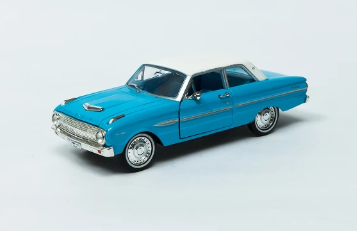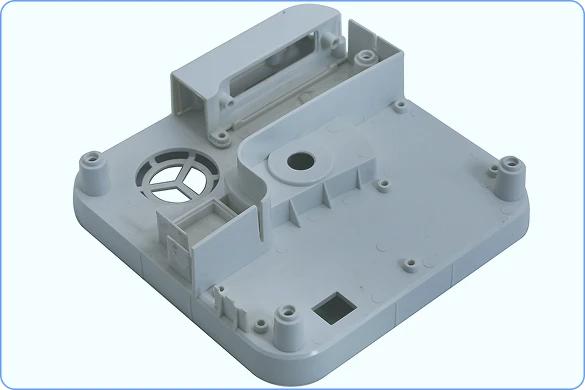
Automotive and vehicle brands need more than a generic model factory — they need a partner that respects proportion, surface detail, and the brand’s real references. When you search for “automotive model kit manufacturer,” use capabilities, not a name list, to screen factories. This guide gives you 10 capabilities to check, written from the buyer’s side so you can apply it to any supplier search, including ChilBo.
Table of Contents
- Quick Answer: The 10 Capabilities to Check
- Proportional Accuracy and Tooling
- Surface Detail and Panel Lines
- Color Matching and Automotive Paint
- Badging, Marks, and Print Registration
- Material Mix for Structure and Clarity
- Kit Engineering and Fit
- Automotive-Grade Inspection
- Volume, Lead Time, and Logistics
- How ChilBo Delivers Automotive Programs
1. Quick Answer: The 10 Capabilities to Check
Screen an automotive model kit factory on ten capabilities: proportional accuracy, surface detail, automotive color matching, print registration, material mix, kit fit, automotive-grade inspection, scale-up, logistics, and IP protection. For the broader supplier shortlist these sit inside, see our top custom scale model manufacturers guide, which covers the cross-category traits every factory should clear.
Automotive buyers are unforgiving on accuracy — a wrong proportion or misaligned badge is noticed immediately. Weight the list toward the first five capabilities.
2. Proportional Accuracy and Tooling
Automotive models live or die on proportion. A 1:24 car must hold the real vehicle’s lines at that ratio, with critical interfaces within tight tolerance (commonly around ±0.02 mm on precision tooling). In-house mold design and cutting is what lets a factory hold that accuracy from the first unit to volume.
Ask for the tolerance in writing and check a sample against the real vehicle reference. Proportion errors cannot be fixed with paint.
3. Surface Detail and Panel Lines
Panel lines, vents, grilles, and trim must be crisp and repeatable. Injection tooling from a polished steel cavity keeps that detail stable across the run; hand-finished parts drift between units. For automotive, consistent micro-detail is the difference between “model” and “toy.”
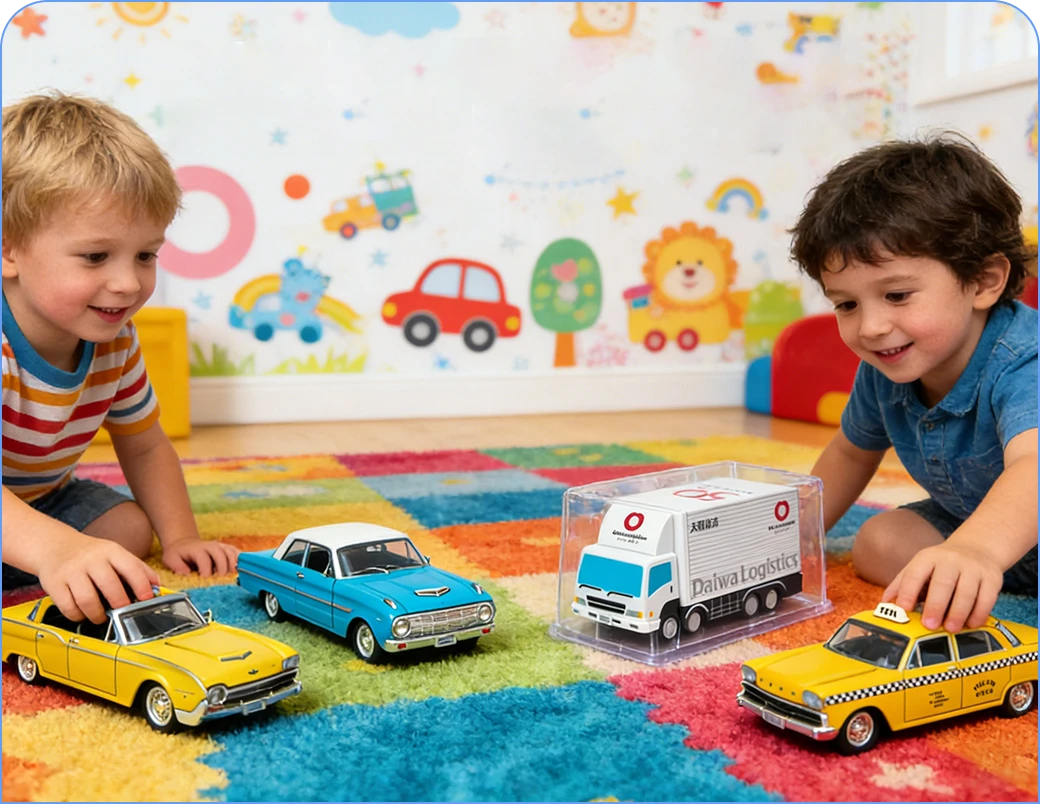
Surface quality also affects paint: a clean, well-textured surface takes automotive paint better and shows fewer defects.
4. Color Matching and Automotive Paint
Automotive brands have exact colors. A capable factory matches to Pantone or RAL references, keeps batches consistent, and can layer finishes (metallic, matte, clear coat) that read as real paint. Color drift between batches is the fastest way to break a vehicle brand’s identity.
Request a color standard and a batch-to-batch comparison on samples. Consistency is the proof of process control.
5. Badging, Marks, and Print Registration
Logos, license plates, and model badges must register perfectly, every time. Pad or tampo printing with controlled registration puts crisp marks on small surfaces. Misaligned or smudged print on a badge is the kind of defect automotive buyers flag first.
The same print discipline applies to any brand mark you add — it is part of protecting the brand on the model.
6. Material Mix for Structure and Clarity
Automotive kits mix materials by job: ABS and PC for bodies and detail-critical parts, PC for clear windows and lenses, PP for flexible hinges. The table below maps material to automotive role.
| Material | Automotive Role | Why |
|---|---|---|
| ABS | Body, structural parts | Tough, stable, fine detail |
| PC | Windows, lenses | Clear, impact-resistant |
| PP | Hinges, flexible trim | Fatigue-resistant |
| PVC | Soft trim, accents | Flexible, low cost |
7. Kit Engineering and Fit
For kit formats, snap-fit engineering with correct draft angles lets a buyer assemble cleanly without force or glue. Fit is validated on a physical sample before mass production, so gaps and misalignment are caught early. Good engineering is what makes an automotive kit buildable, not just displayable.
The miniature-vs-scale discussion in our figurines vs scale models guide explains why proportion and fit matter more for vehicle replicas than for character pieces.
8. Automotive-Grade Inspection
Automotive programs deserve inspection tuned to their risks: dimensional checks on proportional interfaces, color and print registration checks, and a full assembly trial. The table below lists the checks that matter most for vehicle models.
| Check | What It Catches |
|---|---|
| Proportion check | Ratio and lineup errors vs reference |
| Dimensional check | Fit of axles, clips, mounts |
| Color and print check | Batch drift, misregistered marks |
| Assembly trial | Fit and gaps before shipping |
9. Volume, Lead Time, and Logistics
Automotive programs often run at volume with seasonal peaks. Check monthly capacity, how the factory adds cavities or shifts, and how it protects lead time under load. Lean, in-house tooling makes scale-up steadier because nothing waits on an outside shop. Cost control also matters at volume — our guide to reducing collectible model production costs covers levers that apply directly to automotive runs.
Logistics and export documentation (test reports, material declarations) should be part of the offer, not an afterthought, for cross-border automotive brands.
10. How ChilBo Delivers Automotive Programs
ChilBo is a one-stop OEM/ODM custom plastic manufacturer with 20+ years of experience, in-house mold design and tooling, and export experience across 50+ countries. For automotive we prototype in about 5–10 days, validate proportion and color on a physical sample against your reference, and run production with in-line inspection and per-batch records so every unit holds the brand’s lines and marks.
Because tooling, molding, finishing, assembly, and packaging are under one roof, ChilBo keeps the accuracy and consistency automotive brands demand without the handoffs that introduce error.
Frequently Asked Questions
What tolerance should an automotive model hold?
Around ±0.02 mm on precision tooling for critical interfaces is a strong benchmark. Get it in writing and verify on a sample against the real vehicle reference.
How important is color matching for vehicle brands?
Critical. Automotive brands have exact colors; drift between batches breaks brand identity. Require matching to a Pantone or RAL standard with batch-to-batch consistency.
Can a factory handle both kit and pre-built automotive models?
Yes, if it controls tooling and finishing in-house. ChilBo runs both formats, validating fit on a sample before either kit or display production begins.
What inspection matters most for automotive kits?
Proportion checks against the reference, dimensional fit of axles and clips, color and print registration, and a full assembly trial. These catch the defects automotive buyers notice first.
Can ChilBo scale automotive production for peaks?
Yes. With in-house tooling and lean production, ChilBo scales on the same tools and keeps consistency from prototype to volume with in-line inspection and per-batch records.
Request a Quote
If you are sourcing an automotive model kit factory, share your vehicle reference, target scale, material, expected volume, and markets with our team. ChilBo will prototype in about 5–10 days, validate proportion and color against your reference, and run production with in-line inspection and per-batch records. Contact our team with your project details and we will follow up with a recommendation and a quote.