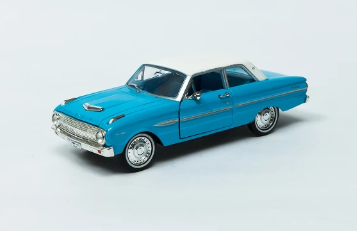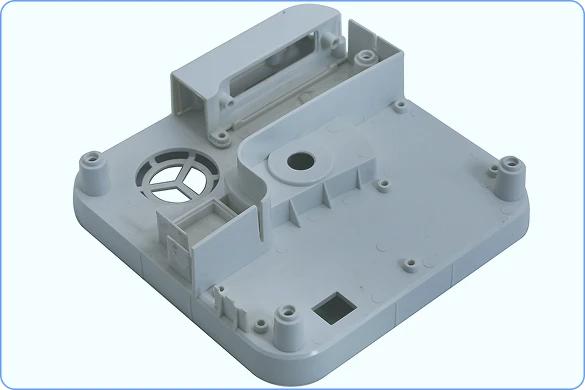
For IP owners and retail brands, producing high-detail collectible figures requires balancing premium aesthetics with strict profit margins. Unlike standard consumer plastics, collectible models demand complex structural engineering, multi-part assembly, and intricate surface finishing, all of which heavily inflate the total manufacturing budget.
Collectible model production costs can be effectively reduced through pre-production Design for Manufacturing (DFM) optimization and strategic material selection, which lower upfront tooling capital and manual assembly labor without compromising the product’s premium appearance.
This technical procurement guide details objective engineering strategies to optimize custom figure manufacturing. By analyzing mold complexity, material variables, and batch planning, procurement teams can successfully execute cost control measures and select a full-service OEM partner capable of maximizing collector value at a competitive unit price.
Table of Contents
- Core Variables Driving Collectible Model Production Costs
- How Mold Design Optimization Reduces Upfront Tooling Capital
- Strategic Material Selection Based on Market Positioning
- Balancing Aesthetic Details with Manufacturing Efficiency
- Application Scenarios: Cost Strategies for IP and Retail Brands
- The Financial Advantage of a Full-Service OEM Manufacturer
- Conclusion and Procurement Recommendations
1. Core Variables Driving Collectible Model Production Costs
The total collectible model production cost is driven by mold complexity, multi-step painting processes, and production volume; controlling these variables requires early engineering intervention rather than simple material degradation.
A manufacturer’s quotation for a custom collectible model is not arbitrary. It is a direct calculation of the fixed tooling investment (molds) and the variable unit costs (material, injection machine time, manual assembly, and painting). Procurement teams must evaluate which specific design elements are driving these costs upward.
Technical Data: Main Cost Factors in Collectible Model Production
| Cost Factor | How It Affects Production Cost | Engineering Optimization Approach |
| Mold Development | Highly detailed designs require multiple steel injection molds, demanding heavy upfront capital. | Optimize the structure and consolidate parts via DFM before tooling begins. |
| Product Complexity | Numerous accessories and moving joints exponentially increase manual assembly and production time. | Simplify unnecessary hidden parts and standardize joint connections. |
| Material Selection | Premium resins and die-cast metals increase raw material and shipping costs. | Select materials based strictly on the specific market positioning and retail price point. |
| Painting & Finishing | Multiple Pantone colors, complex gradients, and pad-printing layers drastically increase manual labor. | Optimize decorative processes by utilizing molded-in colors where applicable. |
| Production Volume | Small pilot batches suffer from high unit costs due to unamortized machine setup times. | Plan production quantities carefully to spread fixed setup costs over thousands of units. |
| Packaging Design | Premium blister packs and multi-layer custom boxes increase the volumetric weight and total cost. | Balance unboxing aesthetics with shipping efficiency and standard box dimensions. |
2. How Mold Design Optimization Reduces Upfront Tooling Capital
Mold design optimization reduces upfront tooling capital by identifying and eliminating unnecessary mechanical complexities, allowing engineers to consolidate separate decorative components into fewer injection molds.
Mold development constitutes the largest initial investment in OEM collectible figure manufacturing, particularly for PVC and ABS products. A highly detailed character design often features complex armor, dynamic poses, and multiple accessories. While visually appealing, these features require multiple molds with complex mechanical lifters and sliders to execute safely.
By conducting a rigorous engineering review prior to tooling, manufacturers evaluate:
- Part Separation and Component Count: Can two separate static accessories be molded as a single piece without causing “undercuts” (areas that trap the plastic in the mold)?
- Mold Release Requirements: Are draft angles optimized so parts eject cleanly without requiring specialized, expensive ejection mechanisms?
- Assembly Methods: Can complex adhesive joints be replaced with standard snap-fit pegs to reduce manual labor?
Eliminating unnecessary tooling complexity prevents costly mold modifications and accelerates the overall production timeline.
3. Strategic Material Selection Based on Market Positioning
Material selection directly impacts both manufacturing expenses and perceived collector value; utilizing injection-molded PVC for high-volume bodies while reserving ABS for structural accessories optimizes the manufacturing budget.
Brands should not automatically select the most expensive material under the assumption that it guarantees a better product. The correct material strategy depends strictly on the target customer, retail price, and intended production volume.
Material Cost Considerations for Collectible Models
| Material | Cost Consideration & Processing | Suitable Application |
| PVC (Polyvinyl Chloride) | Highly efficient for mass volume; offers excellent detail retention and flexibility to prevent breakage. | Character figures, commercial collectibles, and complex clothing/hair elements. |
| ABS (Acrylonitrile Butadiene Styrene) | Low raw material cost but provides high rigidity; cannot be used for complex undercuts without advanced tooling. | Structural body components, bases, and straight, rigid accessories (e.g., swords). |
| Resin (Polystone/PU) | Zero expensive steel tooling required (uses silicone molds), but manual casting drives up the unit cost significantly. | High-detail, limited-edition premium display collectibles. |
| Die-Cast Metal | Highest tooling and raw material costs; requires specialized zinc/aluminum injection equipment. | Premium weighted models, mecha figures, and high-end vehicle replicas. |
4. Balancing Aesthetic Details with Manufacturing Efficiency
Brands can reduce custom figure production expenses without lowering quality by standardizing internal structural geometries and simplifying optional decorative elements that do not add critical visual value to the collector.
The most effective cost reduction strategy is improving manufacturing efficiency while fiercely protecting the external features that collectors value most (such as facial accuracy and primary weapon details).
Manufacturers assist brands in classifying design elements:
- Critical Visual Details: Facial expressions, primary logos, and eye decals. These require high-precision pad printing and should not be compromised.
- Optional Decorative Features: Hidden armor plating or complex gradients on the back of the figure. These can often be simplified to solid molded colors to reduce airbrushing labor.
- Internal Structures: The internal joints that connect the arms to the torso. Standardizing these pegs across multiple figures reduces engineering time and mold complexity.
Furthermore, increasing the production volume spreads the fixed upfront mold costs over a larger quantity, inherently reducing the unit cost contribution per figure.
5. Application Scenarios: Cost Strategies for IP and Retail Brands
Cost reduction strategies must align with the brand’s commercial objective; game studios require complex structural optimization, while retail distributors focus on volume scaling and packaging efficiency to control investments.
Procurement strategies shift based on the specific market demands of the IP or retail entity.
Scenario 1: Game Brand Reducing Production Costs for Character Figures
- Customer Situation: A game company intends to launch physical models based on its highly detailed digital characters, but the initial design includes excessive accessories and multiple complex painting processes.
- Manufacturing Solution: Partnering with an OEM experienced in serving model and collectible brands allows for strict design optimization. The manufacturer evaluates the 3D files to simplify hidden structures and recommends specific PVC/ABS splits, successfully lowering the mold count while maintaining strict character accuracy.
Scenario 2: Anime Merchandise Brand Developing New Collectibles
- Customer Situation: An entertainment company needs to produce premium fan merchandise but faces strict retail pricing ceilings, requiring highly stable production costs.
- Manufacturing Solution: The production partner optimizes the surface finishing process by substituting expensive hand-painted gradients with automated pad printing where applicable. This provides model and collectible brands with a premium appearance at a highly predictable, controlled unit cost.
Scenario 3: Retail Brand Expanding Collectible Product Lines
- Customer Situation: A retail chain wants to launch exclusive collectible series but the massive upfront mold investment creates severe financial pressure on procurement budgets.
- Manufacturing Solution: The factory assists in evaluating the most cost-efficient product structures. By sharing internal joint designs across multiple characters, the manufacturer helps model and collectible brands reduce the number of unique steel molds required, mitigating the upfront capital risk.
6. The Financial Advantage of a Full-Service OEM Manufacturer
Consolidating prototype engineering, mold development, and complex painting within a single full-service OEM facility eliminates multi-vendor markups and provides strict accountability over total production expenses.
Fragmenting the supply chain is a primary driver of cost overruns. If a brand pays a design studio for 3D modeling, a separate machine shop for tooling, and a third factory for injection molding and painting, each vendor applies their own profit margin. Furthermore, if the plastic parts do not assemble correctly, vendors frequently blame one another, leading to expensive mold modification fees.
A full-service custom model production partner provides end-to-end integration. By managing product engineering, mold development, material injection, surface finishing, and packaging under one roof, the manufacturer identifies cost-saving opportunities at every stage and guarantees the final product meets the agreed-upon budget.
7. Conclusion and Procurement Recommendations
Controlling OEM collectible figure manufacturing costs requires objective engineering interventions long before mass production begins. Reducing costs should never equate to degrading material quality or compromising the IP’s aesthetic integrity.
Decision Framework:
- Require a DFM Audit: Before committing to tooling, ensure the manufacturer reviews the 3D design to eliminate unnecessary undercuts, consolidate components, and reduce the total mold count.
- Align Material with Volume: Use PVC and ABS for scalable, mass-market figures, and reserve resin strictly for low-volume, premium statues.
- Consolidate the Supply Chain: Utilize a fully integrated OEM facility to handle molding, painting, and packaging to eliminate multi-vendor markups and logistical delays.
By applying these technical strategies, procurement teams can successfully balance collector-level quality with reasonable production costs. To formally evaluate your 3D assets for manufacturing feasibility, optimize your structural tooling requirements, and secure a competitive production quotation, procurement teams are encouraged to contact Chilbo to initiate an engineering review and establish a cost-efficient manufacturing strategy.
Frequently Asked Questions (FAQs)
Q1: Why is mold development the largest upfront cost in collectible production?
Injection molding requires CNC machining and EDM (Electrical Discharge Machining) of hardened steel blocks to create precise cavities. Collectibles require highly complex molds with moving sliders to capture intricate details like flowing hair or armor, making the engineering and machining process capital-intensive.
Q2: Can I reduce costs by 3D printing the collectibles instead of injection molding?
3D printing is excellent for prototypes but highly inefficient for mass production. It eliminates the upfront mold cost, but the per-unit material and machine-time cost remains extremely high. For quantities above 500-1,000 units, injection molding is always more cost-effective.
Q3: How does reducing the number of parts lower the final unit price?
Fewer parts mean fewer steel molds to machine, less raw material wasted on runners (the channels connecting parts in the mold), and significantly less manual labor required on the assembly line to glue and fit the pieces together.
Q4: Is it cheaper to use pre-colored plastic or paint the figures?
Using pre-colored plastic (color masterbatch mixed directly into the PVC or ABS resin) is much cheaper because it eliminates the manual labor of airbrushing base coats. Painting should be reserved for specific details, logos, gradients, and facial features.
Q5: How does a DFM review prevent unexpected production costs?
A Design for Manufacturing (DFM) review identifies structural flaws—such as areas where the plastic will warp during cooling or where a part will get stuck in the mold—before the steel is cut. Catching these errors digitally prevents the brand from paying for expensive tooling modifications later.