Specify PC for impact strength and optical clarity below 120°C, move to glass-filled PPS for chemical resistance and continuous heat up to 220°C, and reserve PEEK for parts that survive 250°C+, steam sterilization, or high-cycle wear. Everything else is a datasheet habit, not an engineering requirement. Settling PEEK vs PPS vs PC early in your precision plastic parts sourcing process keeps you from spending six figures on heat resistance your part never uses.
Table of Contents
- The PEEK vs PPS vs PC Property Gap That Actually Matters
- Where Each One Wins
- The Cost of Over-Specifying
- Glass-Filled and Other Grades
- Shrinkage, Warpage, and Holding ±0.01 mm
- A 30-Second Decision Matrix
- How We Help You Land It
1. The PEEK vs PPS vs PC Property Gap That Actually Matters
Fewer than 5% of commercial injection-molded programs actually need the PEEK or PPS tier. Most mechanical housings and brackets perform reliably in standard engineering resins, so check whether your operating temperature stays under 100°C before paying a high-temperature premium; our breakdown of ABS vs PC vs POM for industrial parts covers that lower tier in detail.
When your thermal or chemical envelope does push past standard plastics, four numbers decide the material: continuous service temperature, notched impact, solvent resistance, and resin price per kilo. Everything else on a datasheet is secondary.
| Property / Metric | PEEK (unfilled) | PPS (40% glass-filled) | PC (unfilled) |
|---|---|---|---|
| Continuous service temperature | ~250°C | ~220°C (HDT ~260°C) | ~120°C |
| Notched Izod impact, ISO 180 (kJ/m²) | ~3.5–4 | ~7–9 | ~65–90 |
| Chemical resistance | Excellent against most organics and acids | Excellent; insoluble in known solvents below 200°C | Moderate; stress-cracks in esters, ketones, IPA above 50% |
| Relative resin cost (PC = 1×) | ~8–9× (≈$80–150/kg) | ~2.5–3× (≈$15–30/kg) | 1× (≈$4–5/kg) |
| Molding note | 360–400°C melt; hardened H13 tool, oil-heated mold at 170–200°C | 300–340°C melt; high clamp force, vented steel for corrosive off-gas | 270–320°C melt; pre-dry to under 0.02% moisture |
Moving up this ladder does not improve every property. Trading PC for 40% glass-filled PPS to gain chemical resistance gives up roughly 90% of the part’s notched impact strength, and unfilled PPS is brittle enough that most molders refuse to run it alone. If your part has to bend, snap, or survive a drop, the price ladder is the wrong tool.
2. Where Each One Wins
Pick by operating environment, not by resin price. Each of the three owns one envelope and loses badly outside it.
2.1 Polycarbonate (PC): Transparency and High-Impact Housings
Pick PC when the part has to take a hit or pass light below 120°C. Amorphous PC absorbs heavy shock without fracturing and transmits over 88% of visible light, which is why it owns 5G small-cell radome covers, industrial safety lenses, medical device viewing windows, and enterprise router enclosures. If the assembly uses snap-fits or faces drop-test certification, PC handles the deflection where crystalline high-heat resins snap.
The hard limit is chemistry, not temperature. Any part wiped down with IPA above 50%, acetone, or hospital-grade disinfectant needs annealing, a PC/PBT blend, or a different polymer entirely. Environmental stress cracking is the single most common PC field failure we see, and it never shows up on a datasheet.
2.2 Polyphenylene Sulfide (PPS): Under-Hood Heat and Corrosive Fluids
Pick glass-filled PPS, usually 40% glass, when the component sits in hot oils, fuels, or aggressive washdowns between 150°C and 220°C. Unfilled PPS is rarely molded alone because it is too brittle to survive assembly, but 40% glass turns it into a rigid, dimensionally stable workhorse. It owns under-hood automotive sensor housings, EV high-voltage connector blocks, industrial chemical pump impellers, and commercial valve bodies.
The decision is arithmetic: glass-filled PPS delivers roughly 85% of PEEK’s thermal and chemical performance at about one-quarter of the resin price. If your temperature ceiling is 220°C and your part is not flexing, paying for PEEK buys nothing you can measure.
2.3 Polyetheretherketone (PEEK): Extreme Thermal, Wear, and Sterilization
Pick PEEK only when the part lives above 220°C continuously, runs high-cycle dynamic friction, or faces repeated steam autoclaving. We mold PEEK for reusable surgical instrument handles that take 1,000+ steam cycles without hydrolysis, semiconductor wafer-handling clamps, downhole oilfield backup rings, and aerospace structural standoffs.
PEEK earns its price in three specific situations and nowhere else: continuous service above 220°C, repeated autoclave exposure, and sliding wear where the part is its own bearing surface. If your application does not combine high heat with mechanical fatigue or ultra-pure chemical exposure, PEEK is an expensive way to pass a design review.
3. The Cost of Over-Specifying
Over-specifying resin is the fastest way to blow a program’s unit budget. By weight and volume, raw PEEK costs 3 to 5 times more than glass-filled PPS and 15 to 25 times more than PC. On a 25-gram component running at 50,000 pieces per year, stepping from glass-filled PPS to PEEK adds $40,000 to $200,000 in annual resin spend, before you count the higher scrap rate during press startup and the oil-heated tooling you now have to buy.
Those numbers stay abstract until they land on a real drawing. Two programs we handled show both directions of the mistake.
Case 1: PEEK specified for a 115°C bracket. An industrial buyer sent us an RFQ specifying unfilled PEEK for an indoor sensor mounting bracket that ran at 115°C near a mild hydrocarbon mist. The engineer picked PEEK off a datasheet for its heat rating and missed that the part’s cantilevered retention clip needed flexural elongation, not heat resistance. PEEK would have added about $110,000 a year to the BOM, and its notch sensitivity put the clip at risk of fracturing during cold-room installation. We re-specified the clip in a chemical-resistant PC/PBT alloy and the base in 30% glass-filled PPS, which cut unit price by 78% and passed drop testing on the first tool.
Case 2: unfilled PPS chosen to save money on a snap-fit clip. A European instrument maker moved a handheld diagnostic housing clip from PEEK to unfilled PPS to cut resin cost. Every clip in the first 5,000-piece run cracked at the snap undercut during assembly, because unfilled PPS sits at 2 to 3 kJ/m² notched impact and has almost no ability to bend before it breaks. Our toolroom re-ran the part in impact-modified 30% glass-filled PPS, lengthened the cantilever beam by 2.4 mm so the strain spread over a longer arc, and moved the gate off the undercut so the weld line no longer crossed the highest-stress section. First article passed 500 assembly cycles with zero cracks, and unit price stayed 62% below the PEEK quote that started the discussion.
The pattern in both cases is the same. The resin was chosen from a heat rating, and the failure came from a mechanical property nobody checked. One material feasibility review before cutting steel would have caught either mistake.
4. Glass-Filled and Other Grades
Base-polymer datasheets rarely describe what actually goes into the hopper. How you modify these three resins changes tool design, tolerance capability, and regulatory compliance at the same time.
4.1 Glass and Carbon Reinforcement
PPS is almost always molded as PPS-GF30 or PPS-GF40, or blended with PTFE and carbon fiber for wear surfaces. PEEK is frequently run as 30% glass-filled or 30% carbon-filled to push heat deflection past 300°C and hold tight tolerances. Glass fibers align with the melt flow, which creates anisotropic shrinkage: the part pulls differently along the flow direction than across it, and gate placement decides whether your flat mating face stays flat or warps into a banana.
4.2 Flame Retardancy (UL94)
PEEK and PPS are inherently flame retardant and reach UL94 V-0 at thin wall sections around 0.8 to 1.5 mm without halogen additives. Standard PC rates at UL94 V-2. For an electronics enclosure that needs V-0 or 5VA plus better flow and cosmetic hiding power, specify a flame-retardant PC/ABS blend or an FR-grade PC rather than forcing a high-temperature resin into a room-temperature job.
4.3 Regulatory and Market Compliance
When you export medical, automotive, or electronic assemblies, resin selection becomes part of your audit trail. Review the certifications required when sourcing plastic parts overseas to confirm how UL yellow cards, RoHS, REACH, and ISO 10993 biocompatibility documentation map to your specific grade, because a certificate for the base polymer does not automatically cover a compounded or colored version of it.
5. Shrinkage, Warpage, and Holding ±0.01 mm
Resin choice sets your tolerance ceiling before a single cut is made. Every polymer shrinks as it cools, and the amount it shrinks, plus how much that number varies between lots, decides whether your ±0.01 mm callout is achievable or a permanent source of scrap.
Rule of thumb: a tolerance band tighter than roughly 0.2% of the nominal dimension, which is 0.1 mm on a 50 mm span, sits inside the lot-to-lot shrinkage spread of unfilled semi-crystalline resins. Above that threshold you either specify a filled grade or relax the callout.
Typical mold shrinkage, flow direction:
- Unfilled PC: 0.5–0.7%, and near-isotropic because it is amorphous
- Glass-filled PC (10–20% GF): 0.2–0.5%
- PPS-GF40: 0.2–0.5% in flow, 0.4–0.7% across flow
- Unfilled PEEK: 1.1–1.4%
- PEEK-GF30: 0.3–0.6%
- PEEK-CF30: 0.1–0.3%, the tightest of the group
Three consequences follow directly from those numbers.
Crystalline resins need hot tools, not warm ones. PEEK run in a mold below 170°C freezes into an amorphous skin, then keeps crystallizing after ejection, so the part measures one size on the CMM at hour one and a different size at hour 24. Hold the mold at 180–200°C and the part is dimensionally stable the moment it drops. PPS wants 130–150°C for the same reason.
Carbon fill buys tolerance, glass fill buys stiffness. If your drawing calls for ±0.01 mm on a 40 mm span in a high-heat resin, PEEK-CF30 at 0.1–0.3% shrinkage is a realistic target with a hardened tool and in-process CMM checks. Unfilled PEEK at 1.1–1.4% is not, no matter how good the molder is.
Warpage is a gate-layout problem, not a resin problem. When flow-direction and cross-flow shrinkage differ by 0.2 percentage points or more, a flat part will bow. Fix it by moving the gate, adding a flow leader, or balancing wall thickness before you blame the material.
6. A 30-Second Decision Matrix
Lock the resin into your drawing title block with this matrix. Start at the top and stop at the first row your operating environment actually hits.
| Your Primary Operating Requirement | Best Material Choice | Why It Wins, and What to Avoid |
|---|---|---|
| Optical clarity or heavy drop impact below 120°C | PC | Notched impact of 65–90 kJ/m² and over 88% light transmission at $4–5/kg. Avoid if the part sees harsh solvents or continuous steam. |
| 150–220°C heat plus fuels or acids, tight budget | Glass-filled PPS (30–40% GF) | Insoluble in known solvents below 200°C, native UL94 V-0, about 70% cheaper than PEEK. Avoid for high-deflection snap-fits. |
| Continuous service above 220°C, autoclave steam, or high-cycle wear | PEEK | Survives 250°C+, heavy dynamic wear, and thousands of sterilization cycles. Avoid whenever glass-filled PPS or PC already meets the thermal limit. |
| Indoor enclosure needing UL94 V-0 plus cosmetics | FR-grade PC/ABS | Runs at lower pressures than pure PC, hides weld lines better, hits V-0 at a fraction of high-temperature resin cost. |
| ±0.01 mm on a high-heat part | PEEK-CF30 or PEEK-GF30 | Shrinkage of 0.1–0.6% is controllable in a hardened tool. Avoid unfilled PEEK, whose 1.1–1.4% shrinkage will not hold the band across lots. |
If you remember one rule: stay in PC until temperature or chemistry disqualifies it, jump to glass-filled PPS for 150–220°C with fuels or aggressive washdowns, and touch PEEK only for continuous service above 220°C, autoclave steam, or high-cycle wear. Each step up the ladder multiplies resin cost 2 to 8 times and buys capability most parts never use, so let the application force the move and not the datasheet.
7. How We Help You Land It
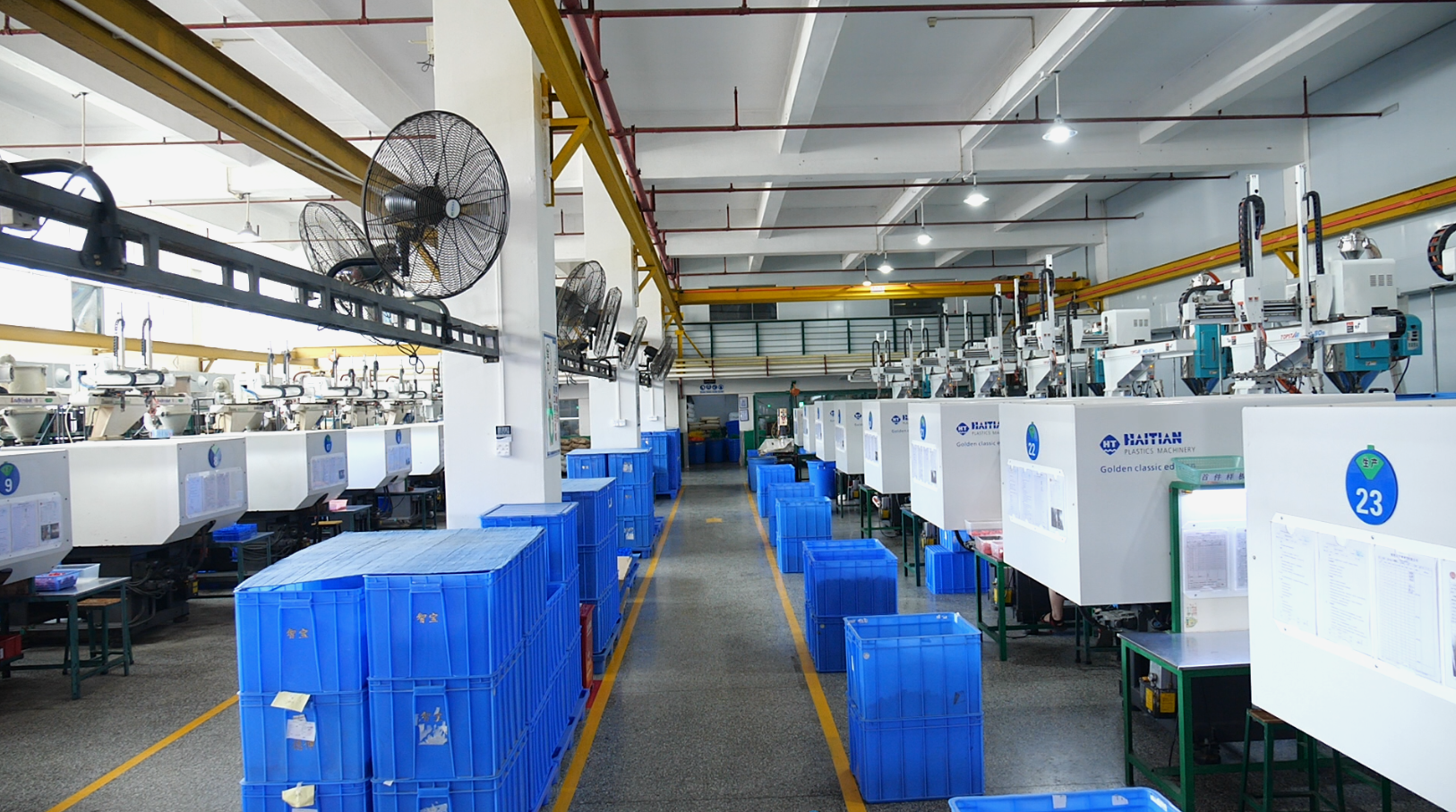
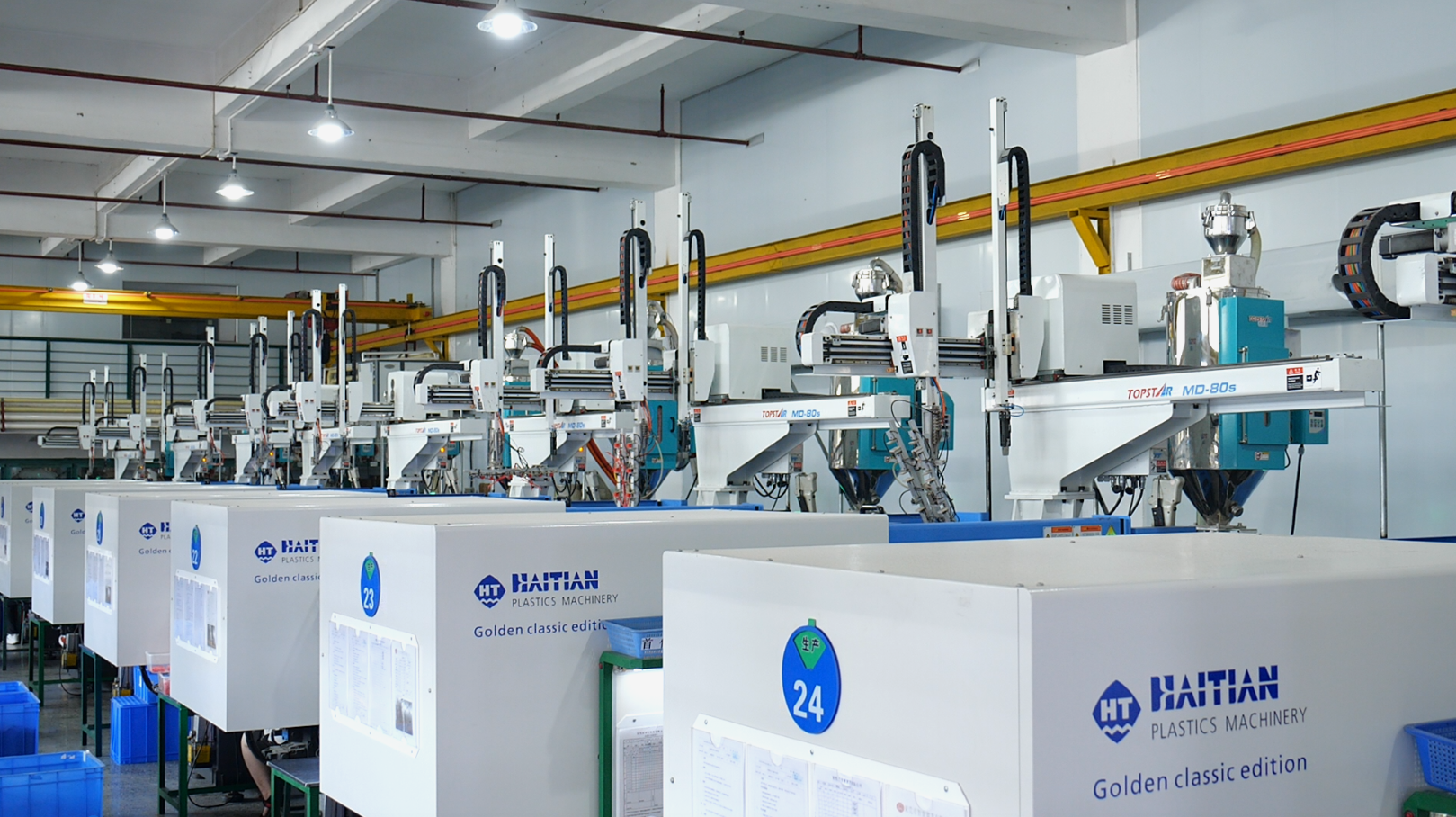
Running high-temperature crystalline polymers takes different shop-floor discipline than shooting commodity housings. Mold PEEK in a cold tool without an oil heater holding 180°C and the skin freezes amorphous, turns brown, and warps the first time the part sees 160°C in service. At ChilBo, our Dongguan facility holds ISO 9001 and ICTI certification and is set up to validate and run tight-tolerance engineering thermoplastics without trial-and-error waste.
7.1 In-House Hardened Tooling and ±0.01 mm Capability
We cut and maintain our own molds in-house across 25 injection presses from 86T to 360T, including a 250T two-shot press. For abrasive glass-filled PPS and high-heat PEEK we build cavities in hardened H13 or S136 steel with dedicated thermal insulation plates and precision venting, which is what holds ±0.01 mm on critical pin pitches and sealing bores.
7.2 Full Resin Lot Traceability Per Batch
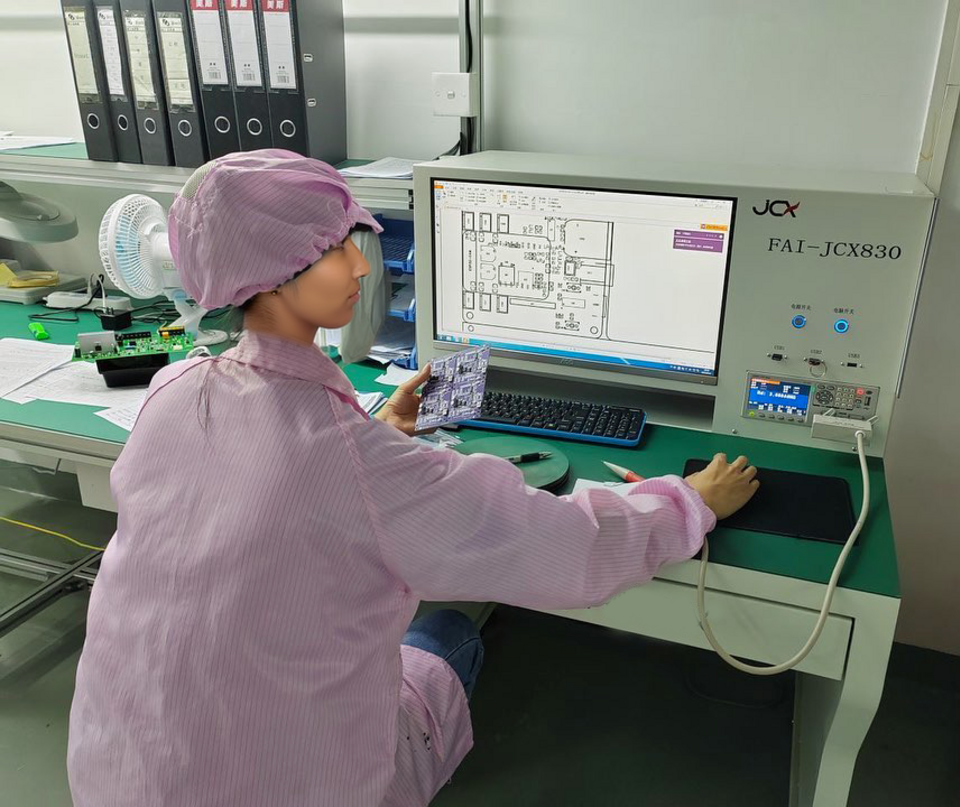
High-value resins invite counterfeit and unauthorized regrind risk at unvetted shops. Every production batch we ship includes the raw material Certificate of Analysis traceable to the exact virgin resin lot number, alongside full CMM dimensional inspection reports.
7.3 Pre-Tooling Material-Feasibility Check
Before you cut steel, our tooling engineers review your wall thickness, snap-fit strain, and thermal callouts against the chosen resin grade to flag brittle failure risk, warpage risk, and unnecessary material spend. That review is where the two cases in section 3 would have been caught.
Sending out drawings for a housing, connector, or high-heat mechanical component? Share your operating temperature, chemical exposure, clarity requirement, and annual volume through our custom plastic injection molding page, and we will run a free material-feasibility check on your 3D CAD file, recommend the lowest-cost grade that actually holds your tolerance, and return a formal DFM and quote within 24 hours.
FAQ
Can I test PPS and PEEK in the same injection mold?
Only if their shrinkage rates match closely. Unfilled PEEK shrinks about 1.2–1.5%, while 40% glass-filled PPS shrinks about 0.2–0.5% in the flow direction, so those two cannot share a cavity. PEEK-GF30 and PPS-GF40, however, land in a similar 0.3–0.6% window. If the tool is built in hardened H13 with high-temperature oil heating from day one, you can often sample both glass-filled grades in the same cavity to benchmark real thermal performance.
Why did my polycarbonate parts crack after being wiped with alcohol?
Polycarbonate is susceptible to environmental stress cracking. Molded-in residual stress plus high-concentration isopropyl alcohol above 50%, acetone, or aggressive hospital disinfectants attacks the polymer chains and causes crazing or sudden brittle failure. If the part needs frequent chemical wipe-downs, anneal it after molding, switch to a PC/PBT blend, or step up to PPS.
Is regrind allowed when molding PEEK or PPS for precision parts?
For critical mechanical, medical, or tight-tolerance automotive components, specify 100% virgin resin. Clean runner regrind up to 15–20% is sometimes used in non-critical industrial PPS brackets, but regrinding glass-filled PEEK or PPS chops the fibers shorter on every pass, which drops tensile and impact strength and shifts part shrinkage outside your tolerance window.
Does PEEK always cost more per part than PPS?
Per kilo, yes, by roughly 3 to 5 times. Per finished part, sometimes no. PEEK’s higher melt temperature and oil-heated tooling raise cycle cost, but unfilled PEEK flows well and PPS-GF40 is abrasive enough to wear gates and require more frequent tool maintenance. Run the comparison on cost per good part, including scrap and tool maintenance, not on resin price alone.