A supplier certification is only as good as its exact scope, accredited issuer, and active validity date — not the JPEG logo pasted on a factory website. When you vet plastic parts supplier certifications during an overseas RFQ, a sales rep who claims “we hold all certifications” without providing verifiable registry numbers is handing you an immediate red flag. Use this verification checklist alongside our complete buyer’s guide to sourcing precision plastic parts to audit what a molder actually holds before you wire a tooling deposit.
Table of Contents
- The 7 Certifications to Check Before You Cut Steel
- How to Verify a Certificate Is Real
- Two Compliance Failures We Untangled on the Shop Floor
- Where ChilBo Stands on Factory and Material Certifications
1. The 7 Certifications to Check Before You Cut Steel
Buyers routinely confuse factory-level quality management systems with material-level chemical or flammability compliance. When building your checklist of questions to ask a precision plastic parts supplier, separate facility audits from resin declarations and verify these seven credentials against your target market.
| Certification | Level | Target Market / Sector | The One Thing You Must Verify |
|---|---|---|---|
| ISO 9001:2015 | Factory QMS | All industrial & commercial buyers | Certificate number, IAF-accredited registrar, and “injection molding” in the scope |
| RoHS (2011/65/EU) | Material / Part | Electrical, electronics, EU imports | Third-party lab report (SGS/TÜV) for the exact resin grade and masterbatch |
| REACH (EC 1907/2006) | Material / Chemical | All goods entering the European Union | Current SVHC candidate-list declaration covering base polymer, colorants, and additives |
| EN 71 / ASTM F963 / CPSIA | Product / Coating | Children’s products, STEM kits, toys | EN 71-3 heavy-metal migration tested on final painted/printed parts, plus a valid CPC |
| UL 94 Flammability | Material / Compound | Electronics enclosures, power housings | UL Yellow Card matching your exact wall thickness and custom color code |
| FDA 21 CFR / EU 10/2011 | Material / Formulation | Food-contact and beverage components | Resin producer declaration for the exact grade under your thermal conditions of use |
| IATF 16949 / ISO 13485 | Sector QMS | Automotive safety / Medical devices | Active registry number (IATF database) and full PPAP or medical lot-traceability controls |
1.1 ISO 9001:2015 (Quality Management System)
ISO 9001:2015 is the non-negotiable baseline quality management system for any serious custom molder. Every industrial, electronics, and consumer buyer requires it to ensure the factory documents incoming resin checks, press setup parameters, tool maintenance, and non-conforming part containment. Ask for the certificate number, the accredited issuing body, the exact scope statement, and the surveillance audit status. ISO 9001 runs on a three-year validity cycle but requires an annual surveillance audit to remain active. A certificate scoped strictly to “trading of hardware” or “assembly of promotional toys” does not cover precision custom injection molding or in-house mold making.
1.2 RoHS (EU Directive 2011/65/EU and RoHS 3)
RoHS restricts ten hazardous substances — including lead, mercury, cadmium, hexavalent chromium, PBB/PBDE flame retardants, and four phthalates — in electrical and electronic equipment. Any buyer shipping electronic housings, connectors, or sub-assemblies into Europe or California needs full compliance. Request a current third-party RoHS test report (issued by SGS, TÜV, or Intertek within the last 12 months) or a signed declaration per resin grade, and confirm it covers both the base polymer and the pigment masterbatch.
1.3 REACH (EC 1907/2006)
REACH governs the registration, evaluation, and restriction of chemicals across all product categories entering the European Union, extending far beyond electronics. EU customs authorities and retail importers increasingly demand up-to-date Substance of Very High Concern (SVHC) declarations before clearing sea freight. Ask your molder for a written SVHC declaration covering the base resin, colorants, mold-release agents, and flame-retardant additives against the latest ECHA candidate list (which updates twice a year).
1.4 EN 71 (EU), ASTM F963 (US), and CPSIA (US)
These three standards govern mechanical safety, flammability, and toxicology for children’s products, educational STEM kits, and toys in Europe and North America. Here is the trap that catches hardware buyers: EN 71-3 heavy-element migration must be tested on the final painted, pad-printed, or plated production parts, not just the raw uncolored resin pellets. For the US market, CPSIA requires a formal Children’s Product Certificate (CPC) backed by testing from a CPSC-accepted third-party lab.
1.5 UL 94 Flammability Rating
UL 94 classifies how plastic materials burn or self-extinguish (rated HB, V-2, V-1, V-0, or 5VA) once exposed to an open flame, and it is mandatory for electrical enclosures, battery packs, and power-supply housings. A UL 94 rating is a material-level credential documented on a UL Yellow Card, not a blanket factory certificate. Watch for a critical engineering subtlety: UL Yellow Card ratings are frequently color-specific and thickness-specific. A polycarbonate grade rated V-0 at 1.5 mm in natural (NC) or black (BK) can drop to V-1 or fail completely when blended with a custom gray or red masterbatch. Always demand the UL Yellow Card that explicitly covers your target wall thickness and your exact color code.
1.6 FDA 21 CFR and EU 10/2011 (Food Contact)
These regulations govern chemical migration and extractables for plastic parts that directly touch food, beverages, or drinking water. You only need this if your component sits in the food path — such as coffee-machine fluid manifolds, commercial kitchen dispensers, or reusable containers. An ISO 9001 factory certificate does not make a part food-safe; you must obtain the material-level compliance declaration directly from the resin manufacturer (e.g., Sabic, DuPont, BASF) for the exact resin grade, colorant, and thermal operating conditions, paired with clean-press purging protocols so non-food regrind never contaminates the barrel.
1.7 IATF 16949 (Automotive) and ISO 13485 (Medical Devices)
IATF 16949 and ISO 13485 are rigorous sector-specific quality management systems for automotive production parts and medical devices. Let’s be blunt: a standard ISO 9001 certificate does not equal IATF 16949 or ISO 13485. Automotive tier-ones require an active IATF certificate plus Level 3 PPAP packages, FMEA, and MSA studies; medical OEMs require ISO 13485 risk management and lot-by-lot traceability. Beyond quality and material certs, many global consumer and retail brands also audit factories along a separate ethical and social-compliance axis — requiring active BSCI, Sedex (SMETA), or ICTI Ethical Toy Program certifications before onboarding a vendor.
2. How to Verify a Certificate Is Real
Never accept a low-resolution PDF screenshot as proof of compliance. A disciplined procurement engineer verifies plastic parts supplier certifications in four steps before releasing a purchase order:
2.1 Cross-Check the Certificate Number on the Issuer’s Public Portal
Legitimate quality certificates are issued by accredited registrars such as SGS, Bureau Veritas, TÜV Rheinland, BSI, Intertek, or CQC. Every authentic document carries a unique registration number and an accreditation mark (such as CNAS, UKAS, or ANAB). Copy that certificate number into the issuing body’s online directory or the IAF CertSearch database. If the registrar cannot be named or the number returns “not found,” the PDF was doctored.
2.2 Match the Scope Statement and Chinese Legal Address
Brokers frequently forward the ISO certificate of a partner factory and claim it as their own, or use a certificate registered to a sales office. Verify that the legal company name and physical street address on the certificate match the factory address on your commercial quotation and bank wire instructions. Read the scope line word for word: it must explicitly state “Manufacture of plastic injection molded parts” or “Design and manufacture of plastic molds.”
2.3 Check Validity Dates and Annual Surveillance Stamps
An ISO 9001 certificate shows a three-year expiration date, but it becomes invalid after 12 months if the factory skips its annual surveillance audit. Ask the supplier for their most recent surveillance audit confirmation letter or the close-out report from any minor non-conformances found during the last inspection.
2.4 Demand the Chain of Evidence per Shipment
A valid wall certificate proves a factory has a procedure manual; it does not prove your Tuesday night production run stayed in spec. Real compliance lives in the shipment paperwork. Your contract must tie factory certifications to a mandatory OEM quality control process that delivers a First Article Inspection (FAI) report before mass production, a resin lot Certificate of Analysis (CoA) and Certificate of Conformance (CoC) with every batch, and pre-shipment dimensional verification.
Walk away immediately if you spot these four audit red flags:
The supplier blacks out the certificate number or claims the registrar’s name is “confidential.”
The material RoHS report is four years old or lists a generic polymer name (“ABS resin”) instead of the specific commercial grade and lot number on your print.
The factory claims “ISO 13485 compliant” or “IATF compliant” — in auditing, you are either certified by a registrar or you are not.
The UL Yellow Card provided for an enclosure lists “All Colors (ALL)” only for HB rating, while your drawing specifies V-0 in a custom Pantone shade.
Decision rule before any deposit: require three documents — the ISO 9001 certificate with its number and scope line, the material-level paperwork for your exact grade and color (RoHS/REACH declaration, EN 71-3 report on finished painted parts, or the UL Yellow Card at your wall thickness), and a sample shipment packet (FAI, resin CoA, QC release). A supplier who produces all three within a week is real; one who stalls on any of them is not worth the tooling deposit.
3. Two Compliance Failures We Untangled on the Shop Floor
Both of these reached us with product already inside the shipping window. In the first, a five-year-old RoHS sheet on raw pellets could not clear customs for painted and printed parts; in the second, a legitimate V-0 resin lost its listing the moment the press floor added 3% uncertified gray masterbatch.
3.1 Painted STEM-Toy Components Stopped by Missing EN 71-3 Coating Reports
A European STEM-toy brand transferred an injection-molded gear and housing assembly to us weeks before their peak holiday shipping window. Their previous supplier had promised “full CE and EN 71 compliance,” but when the buyer’s freight forwarder requested the technical file, the vendor only handed over a five-year-old RoHS sheet for raw natural ABS pellets. The parts had three pad-printed ink colors and a sprayed polyurethane topcoat.
Our quality team flagged immediately that under EN 71-3 and US CPSIA rules, heavy-element migration limits (for lead, cadmium, barium, and antimony) apply to the final scraped surface coating, where wet inks and pigments concentrate heavy metals. We quarantined the legacy ink lot, sourced certified low-metal pad-printing inks, molded a fresh pilot lot, and sent the final painted and printed production parts for third-party EN 71-3 and ASTM F963 soluble heavy-metal testing. We delivered the passing migration lab reports alongside a fully traced Children’s Product Certificate (CPC), allowing the buyer’s importer to clear EU and US customs before the holiday cutoff.
3.2 Industrial Sensor Housing That Lost Its UL 94 V-0 Rating After Coloring
A US industrial-sensor manufacturer needed a rugged PC/ABS enclosure rated UL 94 V-0 at a 2.0 mm wall thickness. Their prior molder quoted “UL 94 V-0 PC/ABS material” and bought a legitimate base resin, but mixed it on the press floor with 3% of an uncertified custom light-gray masterbatch to match the client’s brand housing. When the client’s compliance lab checked the UL Yellow Card during an audit, they discovered the base grade held a V-0 rating only in Natural (NC); adding an unlisted pigment carrier dropped the compound to V-1 and invalidated the safety listing.
When the buyer sent us the 3D CAD for a rescue quote, we caught the color-listing conflict during our pre-tooling review of DFM changes that cut injection mold cost. Instead of letting the client re-tool for thicker walls, we switched the specification to a pre-compounded FR-PC/ABS grade whose UL Yellow Card explicitly registered “All Colors (ALL)” at V-0 down to 1.5 mm. We locked the pre-colored resin lot into our incoming inspection protocol and attached the matching UL Yellow Card and resin CoA to the First Article Inspection package. The sensor passed its UL safety audit on the first submission without a dollar spent on mold modifications.
4. Where ChilBo Stands on Factory and Material Certifications
Here is exactly what we hold, what we build to, and what we do not hold — check it against your print and target market before you send an RFQ:
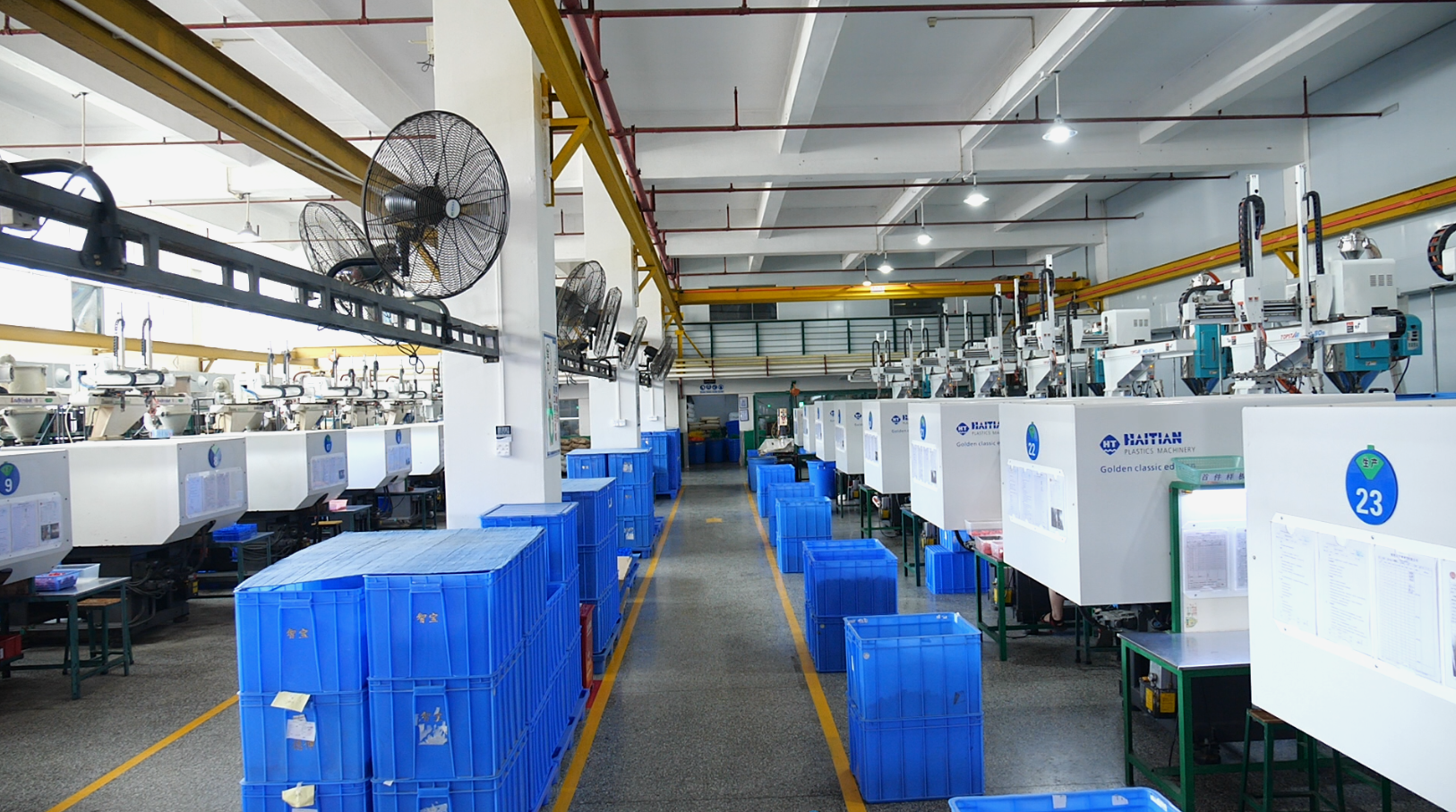
At our Dongguan plant (part of a group founded in 2006; 25 injection machines from 86T to 360T, including a 250T two-shot press and full in-house mold making), here is our exact compliance baseline:
Active Factory Certifications: We hold verified ISO 9001:2015 and ICTI (Ethical Toy Program) certifications. We provide our certificate numbers and latest surveillance audit records upfront with every RFQ response.
Standards We Build and Test To: We routinely manufacture precision parts compliant with RoHS, REACH, ASTM F963, EN 71, and CPSIA requirements, and we run strict BPA-free production audits.
In-House Metrology and Reliability Lab: You can inspect our capabilities to see our internal verification equipment — we operate programmable 3D CMMs, 2D optical vision measurement systems, and in-house salt-spray testing chambers, holding tolerances down to ±0.01 mm. Every production shipment leaves our dock with a dimensional inspection report, a resin lot Certificate of Analysis (CoA), and a final QC release sheet.
What We Do Not Hold as Factory System Certs: We do not currently hold IATF 16949, ISO 13485, or factory-level UL/FDA system registrations. When your print calls for material-level UL 94 flammability or FDA 21 CFR / EU 10/2011 food-contact compliance, we purchase virgin listed grades directly from authorized distributors, maintain 100% lot traceability from the resin bag to the shipping carton, and supply the resin producer’s official UL Yellow Card or food-contact declaration for your exact grade and color. If your program legally requires an IATF 16949 or ISO 13485 certified facility, we will tell you straight up before you cut steel — not after.
Ready to vet our documentation on a live part? Send your 3D STEP file, 2D drawing, target export market, and end-use requirements to our engineering team today — we will return a compliance-ready document sample pack (our active ISO 9001:2015 and ICTI certificates, sample resin CoA/RoHS declarations, and FAI template) alongside a full DFM review and itemized quote within 24 hours.
FAQ
Is ISO 9001 enough for an automotive or medical plastic part?
For non-safety aftermarket accessories or general laboratory housings, ISO 9001:2015 with tight CMM inspection is often acceptable. However, primary OEM automotive components require IATF 16949 certification with full PPAP documentation, and regulated medical devices require ISO 13485 risk management and traceability controls. A general ISO 9001 certificate does not substitute for either sector standard.
How do I know a supplier’s ISO certificate isn’t expired or fake?
Check four things on the document: the unique certificate number, the logo of an IAF-accredited issuing body (such as SGS, TÜV, or Bureau Veritas), a scope statement that explicitly includes plastic injection molding, and the validity date. Always ask for the date of the factory’s latest annual surveillance audit and verify the number on the registrar’s public website.
My part is just a plastic enclosure — do I still need UL or FDA certification?
It depends entirely on what goes inside or touches the enclosure. If the housing encloses live electrical circuitry or lithium batteries, safety auditors will almost always require a UL 94 flammability rating (such as V-0 or HB) verified by a material UL Yellow Card. You only need FDA 21 CFR or EU 10/2011 compliance if the plastic directly contacts food or beverages.
What is the practical difference between RoHS and REACH when buying plastic parts?
RoHS restricts ten specific hazardous substances (such as lead, cadmium, and specific flame-retardant phthalates) inside finished electrical and electronic components. REACH is a much broader European chemical regulation that applies to almost all imported products, requiring your molder to declare that the base resin, pigments, and processing additives do not contain over 0.1% by weight of any listed Substance of Very High Concern (SVHC).