Choosing an unverified collectible figure supplier frequently leads to misaligned proportions, severe paint defects, and costly mold reworks that delay product launches. To secure a reliable manufacturing partner, brands must rigorously evaluate a factory’s in-house 3D engineering, mold-making precision, and strict quality control protocols before mass production. Ignoring these technical prerequisites directly jeopardizes the commercial viability of your licensed merchandise.
This technical guide outlines the exact questions procurement teams must ask to distinguish a true manufacturing partner from a high-risk broker. By asking these questions, you will establish a data-driven framework for selecting a factory capable of executing complex geometries and premium finishes.
Table of Contents
- Can You Support Custom Model Development from Concept to 3D Engineering?
- Do You Provide CNC or 3D Printed Prototypes Before Cutting Steel Molds?
- What Materials Do You Recommend for High-Fidelity Collectible Manufacturing?
- How Do You Ensure Production Accuracy and Structural Integrity in Assembly?
- Can You Maintain Consistent Painting and Finishing Quality in Bulk Orders?
- Do You Have Proven Experience as a Scale Model Manufacturer?
- Can You Provide a Complete OEM Scale Model Supplier Workflow Under One Roof?
- How Do You Manage Tooling and Mold Development for Complex Miniature Parts?
- What Are Your Quality Control Protocols During Mass Production?
- Can You Handle Custom Packaging and Final Assembly for Direct Retail Delivery?
1. Can You Support Custom Model Development from Concept to 3D Engineering?
A factory is only qualified for custom model development if they offer in-house Design for Manufacturability (DFM) engineering to eliminate undercuts and parting line issues prior to tooling.
Understanding a supplier’s design capabilities sets the foundation for your entire production run. If a manufacturer blindly accepts a 2D sketch without mechanical review, they are virtually guaranteeing structural failure on the assembly line.
DFM and Structural Optimization
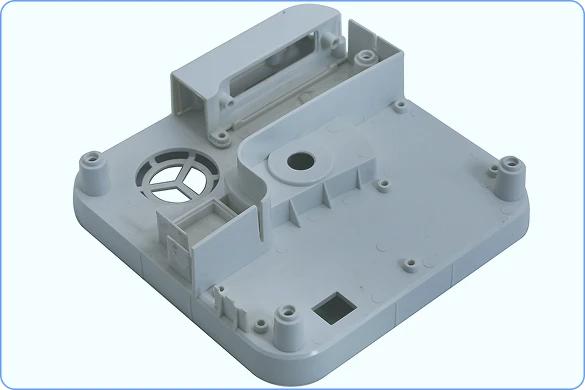
Transforming a concept into a tangible collectible requires more than artistic talent; it requires mechanical engineering. Professional suppliers employ 3D modelers who dissect the digital model to ensure moldability. They split the character or vehicle into interlocking parts to hide seam lines and prevent plastic from becoming trapped in the steel mold.
Decision Rule: If the character design features dynamic poses or overlapping clothing, then the manufacturer must proactively split the 3D model into multiple injection-ready components to ensure safe demolding.
2. Do You Provide CNC or 3D Printed Prototypes Before Cutting Steel Molds?
Approving a physical, high-resolution SLA or CNC prototype is mandatory before initiating capital-intensive steel mold development to validate scale and assembly tolerances.
Read on to understand why skipping the physical prototyping phase is the most expensive mistake a procurement team can make during product development.
The Role of Prototyping in Risk Mitigation
Digital renders often hide physical flaws. A reputable factory will generate a master prototype using high-resolution 3D printing (SLA/DLP) or 5-axis CNC machining. This physical sample allows the brand to evaluate surface textures, part fitment, and overall aesthetics. Only after this “white model” is perfected and approved should the factory begin cutting the hard steel molds.
Decision Rule: If a supplier refuses to provide a physical, dimensionally accurate pre-production sample, then the brand must halt the project immediately to avoid uncorrectable and expensive tooling errors.
3. What Materials Do You Recommend for High-Fidelity Collectible Manufacturing?
Material selection dictates tooling costs and structural performance; PVC is required for scalable detail, ABS for rigid mechanical joints, and Resin for premium, zero-shrinkage statuary.
Review the comprehensive material matrix below to see how a supplier’s material recommendations should align with your product’s specific engineering and budget constraints.
Different collectible products require distinct polymers based on detail level, durability, budget, and production volume. A reliable supplier will never let a client guess; they will specify the exact chemical composition needed for each part.
Material Comparison for Collectible Models
| Material | Primary Use Cases | Cost Impact | Production Complexity | Recommended Scenarios |
| PVC | Character bodies, soft accessories, flowing capes. | High upfront tooling (steel molds); low unit cost. | High. Requires exact cooling times to prevent plastic warping. | Mass-market custom collectible model kits requiring fine details and impact resistance. |
| ABS | Structural skeletons, mechanical bases, articulated joints. | High upfront tooling; very low unit cost. | Moderate. Highly rigid, requiring careful draft angle calculations. | Models requiring structural rigidity and snap-fit assembly tolerances. |
| Resin (PU) | Premium statues, master prototypes, limited editions. | Low tooling costs (silicone molds); high manual labor cost. | Low tooling complexity; extremely fragile requiring specialized packaging. | High-end collector statues prioritizing microscopic details over durability. |
Decision Rule: ABS material is strictly recommended when the model requires load-bearing mechanical joints or interlocking structural bases, as PVC will warp under sustained mechanical stress.
4. How Do You Ensure Production Accuracy and Structural Integrity in Assembly?
Production accuracy is guaranteed only when engineers accurately calculate polymer shrinkage rates to ensure tight-tolerance assembly between dissimilar materials.
Continue reading to discover why merging different plastics is a complex engineering challenge that separates amateur workshops from tier-one manufacturing facilities.
Managing Thermal Shrinkage in OEM Production
When plastics are injected into a mold at high temperatures, they shrink as they cool. PVC and ABS have different thermal contraction rates. A common manufacturing defect occurs when a PVC arm no longer fits into an ABS torso because the shrinkage was not calculated during the CAD phase. Furthermore, high-quality models often rely on internal hardware—such as custom precision metal pins or micro-springs—to maintain joint friction and structural integrity.
Decision Rule: If mating a PVC limb to an ABS torso, then the mold cavities must be scaled differently at the tooling stage to account for the unique cooling contraction rates of each specific polymer.
5. Can You Maintain Consistent Painting and Finishing Quality in Bulk Orders?
Consistent surface finishing requires precision copper electroform masks and automated pad printing rather than relying entirely on manual, freehand painting across thousands of units.
The following section explains how industrial finishing techniques prevent the aesthetic degradation that typically plagues large-scale manufacturing runs.
Standardizing Aesthetic Quality
A beautiful prototype is meaningless if the factory cannot replicate it 10,000 times. Hand-painting is prone to human error, fatigue, and color drift. Professional suppliers mitigate this by engineering copper electroform masks that snap over the injected part, exposing only the exact area to be airbrushed. For intricate details like character eyes, warning labels on vehicles, or UI panels, automated pad printing machines are used to ensure absolute uniformity.
Decision Rule: When a model features precise eye decals or intricate uniform logos, then copper masking and automated pad printing must be explicitly written into the production contract.
6. Do You Have Proven Experience as a Scale Model Manufacturer?
A true scale model manufacturer proves their expertise by providing past case studies of highly detailed, multi-component CAD-to-mold projects rather than generic, single-piece plastic toys.
Evaluating a supplier’s past portfolio is essential for determining if they possess the specialized metrology equipment required for hyper-accurate proportional scaling.
Validating Industry-Specific Expertise
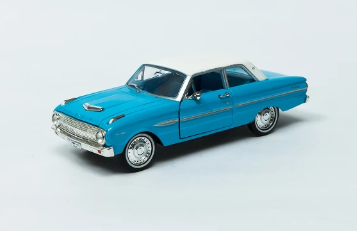
Scale models (such as 1:18 cars or 1:72 aircraft) demand an obsession with accurate proportions and micro-detailing. A factory optimized for producing simple promotional items will fail when tasked with recreating accurate panel lines, complex engine blocks, or precise architectural features. Ask to inspect physical samples of their previous scale model work to verify that their steel tooling is sharp and free of excess plastic flashing.
Decision Rule: If the product requires accurate vehicle, weapon, or architectural proportions, then the supplier must demonstrate prior experience with exact CAD-to-mold scaling techniques and high-tolerance multi-part assembly.
7. Can You Provide a Complete OEM Scale Model Supplier Workflow Under One Roof?
An end-to-end OEM scale model supplier minimizes communication errors and tolerance mismatches by handling 3D modeling, tooling, injection, surface treatment, and assembly within a single facility.
Read on to understand why fragmented supply chains introduce severe IP risks and catastrophic delays during the transition from molding to painting.
The Risks of Fragmented Supply Chains
Many trading companies win bids by offering low prices, only to outsource the molding to one factory, the painting to another, and the assembly to a third. This creates a logistical nightmare. If the paint shop applies too thick of a primer coat, the parts will no longer fit together during assembly, and neither subcontractor will take responsibility. A single-source OEM facility ensures unified quality control and strict accountability.
Decision Rule: If you want to protect your licensed IP and ensure structural accountability, then mandate that all tooling, injection molding, and final assembly occur at the same factory facility.
8. How Do You Manage Tooling and Mold Development for Complex Miniature Parts?
High-precision miniature parts require multi-cavity hardened steel molds processed with Electrical Discharge Machining (EDM) to prevent flashing and capture microscopic textures.
The following details the specific tooling requirements necessary for miniature figurines manufacturer operations, where standard CNC milling falls short.
Tooling Complexity in Miniature Manufacturing
A reliable miniature model manufacturer understands that shrinking a model down exponentially increases the difficulty of mold flow analysis. If the gates (where plastic enters the mold) are too large, they will destroy the miniature part when sheared off. If cooling channels are poorly designed, the tiny parts will warp immediately upon ejection. Tooling for miniatures requires premium-grade steel and slow, precise EDM processes to achieve textures like fabric weaves or chainmail on a 2-inch figure.
Decision Rule: When producing miniature components smaller than 5mm, Electrical Discharge Machining (EDM) must be used on the steel mold cavities to achieve microscopic surface textures without tool-path scarring.
9. What Are Your Quality Control Protocols During Mass Production?
Reliable mass production is sustained by implementing strict Quality Control (QC) checkpoints, including spectrophotometer color matching and first-article inspections before scaling up injection.
Continue reading to discover the exact inspection protocols your procurement team must demand to prevent receiving containers of defective merchandise.
Preventing Batch-to-Batch Degradation
Quality control is not an afterthought; it is an active, ongoing process. A professional supplier will establish an Acceptable Quality Limit (AQL) standard before production begins. They monitor raw plastic resin batches for color consistency, track injection machine pressure to prevent short-shots (incomplete parts), and utilize precision jigs during assembly to ensure every unit sits perfectly flat on its base.
Decision Rule: If a supplier’s defect rate exceeds 2% during the initial pilot run, then mass injection must be paused immediately until the injection pressure, temperature parameters, and mold gating are recalibrated.
10. Can You Handle Custom Packaging and Final Assembly for Direct Retail Delivery?
Custom blister packaging and rigid corrugated outers are engineered necessities to protect fragile collectible geometries during global overseas transit.
The final section explores why packaging is the last, and often most overlooked, line of defense in the manufacturing workflow.
Protective Packaging as an Engineering Function
A perfectly manufactured collectible is worthless if it arrives shattered. Packaging for collectibles is not just about branding; it is structural engineering. Factories must vacuum-form custom PET clamshell blisters that perfectly hug the contours of the figure, ensuring it does not shift or rub against the plastic during shipping, which can cause paint transfer.
Decision Rule: If a resin or complex PVC collectible features protruding, fragile elements (such as swords, antennas, or wings), then a custom-molded clamshell blister paired with a double-walled corrugated outer box is strictly required.
Conclusion
Choosing the right manufacturing partner dictates the success, profitability, and collector reception of your physical product launch.
- Technical Insights: Achieving high-fidelity collectibles requires expert management of plastic thermal shrinkage rates, precision EDM tooling for micro-textures, and the use of copper electroform masks to eliminate hand-painting errors.
- Decision Rules: Always demand a physical CNC/SLA prototype before authorizing steel mold production, and strictly require all tooling, injection, and assembly to be handled by a single, integrated facility to prevent tolerance failures.
- Selection Logic: Base your final supplier choice on their proven OEM capabilities, their ability to dictate correct material usage (PVC vs. ABS vs. Resin), and their implementation of strict, data-driven Quality Control protocols.
By holding potential partners to these rigorous standards, you ensure that your chosen collectible model manufacturer operates as a true extension of your engineering and product development team.
Does your collectible product require complex structural integrity, internal hardware, or flawless mass production?
As an industry expert at Guangdong Hershey Spring Industrial Co., Ltd. with over 20 years of experience in custom precision manufacturing, I know that premium collectibles rely heavily on exact tolerances, internal metal stamping parts, and precision springs for articulated joints. Whether you need engineering consultation on the internal hardware of your next action figure or require a partner with deep roots in industrial manufacturing, contact our technical team today. Request a design evaluation, ask for component samples, or get a detailed quotation for your project.
FAQ Section
1. What is the typical lead time when working with an OEM scale model supplier?
A complete OEM production cycle generally takes 90 to 150 days. The design DFM and prototyping phase requires 15 to 30 days. Hardened steel mold creation is the longest stage, taking 30 to 45 days. The remaining 45 to 75 days are dedicated to pilot testing, mass injection molding, surface painting, assembly, packaging, and final quality control inspections.
2. Why do manufacturers recommend ABS plastic for mechanical joints instead of PVC?
ABS (Acrylonitrile Butadiene Styrene) is recommended because it is a highly rigid, dimensionally stable thermoplastic with excellent tensile strength. PVC is too soft and flexible; if used for load-bearing joints or interlocking pegs, it will warp, shear, or become loose over time due to friction and mechanical stress.
3. How does a collectible figure supplier protect my original IP during the manufacturing process?
A professional supplier protects your Intellectual Property by requiring mutually binding Non-Disclosure Agreements (NDAs) prior to receiving 3D files. Furthermore, they keep all CAD files on secure offline servers, restrict factory floor photography, and maintain in-house tooling to prevent your designs from being leaked by third-party mold-making subcontractors.
4. Can a miniature model manufacturer reduce my initial tooling costs?
Yes. An experienced manufacturer can reduce tooling costs by performing a thorough Design for Manufacturability (DFM) review. By subtly adjusting a character’s pose or consolidating parts, they can eliminate severe geometric undercuts. This reduces the need for complex, multi-directional slider mechanisms in the steel mold, significantly lowering capital expenses.
5. What is an Acceptable Quality Limit (AQL) in collectible manufacturing?
AQL is a statistical measurement used during quality control inspections to determine the maximum number of defective units allowed in a batch before the entire production run is rejected. For premium collectibles, brands typically enforce a strict AQL standard (often 1.5 for major defects and 2.5 for minor cosmetic defects) to guarantee high aesthetic consistency.
6. Do I need to provide a fully engineered 3D CAD file to the supplier?
No, a fully integrated OEM supplier can work from high-resolution 2D turnaround sketches. Their in-house engineering and 3D modeling teams will translate your 2D artwork into a 3D printable file, applying the necessary structural adjustments, draft angles, and part-splits required for successful injection molding.